Step 1
Expansion signal detected
Signal
Solves for missed growth signals like headcount changes, funding, satisfaction, and product usage that can reveal new revenue opportunities.
Growth signals, usage patterns, and customer momentum get surfaced and acted on automatically.
Each message reflects the wins, usage, and priorities specific to that account, opposed to a generic upsell.
The right stakeholders are researched and engaged every time, creating a path for repeatable growth.
Outreach connects to the CRM and tools your team already uses, then layers on AI agents that handle the manual work a rep would otherwise do. Here's the full path, from a growth signal to a well-timed conversation.
Step 1
Expansion signal detected
Revenue Agent engages key stakeholders
Research Agent builds account context
Personalization Agent customizes the message
Outreach sends on behalf of the rep
Growth indicators like headcount changes, funding, satisfaction, and product data flag the need for additional seats or services.
It sources and enrolls the right contacts into an expansion sequence on behalf of the account owner.
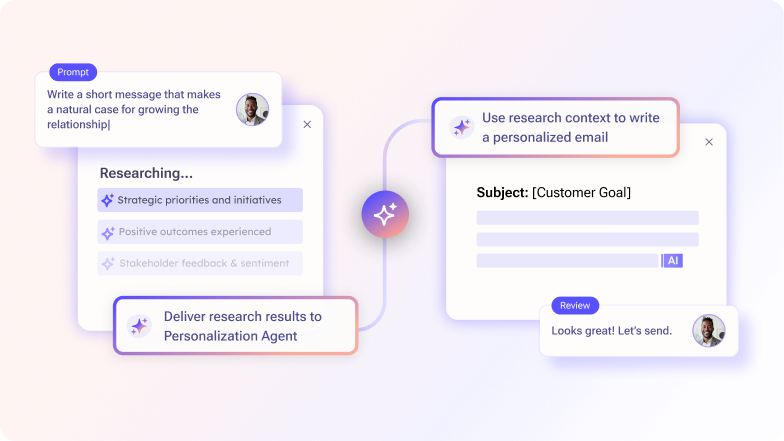
It gathers current priorities, initiatives, recent wins, and other details relevant to the opportunity.
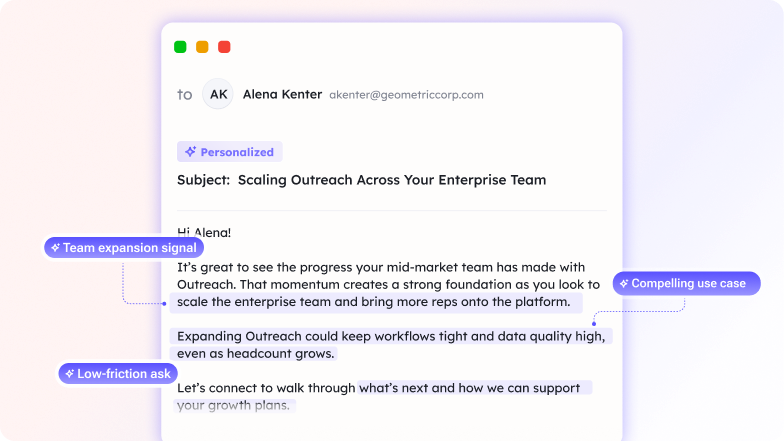
It tailors your positioning to each persona, making a well-timed case for growing the relationship.
Each step deploys automatically or queues for review, timed to the signal that triggered it.
In Outreach, an agent is set up once with plain-language instructions. No code. You tell it what to look for and what to produce. Here's how the agents in this recipe work together: one gathers the context, the other turns it into a message.
How does the agent identify expansion opportunities?
The Research Agent monitors multiple signals: growing headcount (hiring), new initiatives (job postings, funding), usage patterns (feature adoption), and conversation themes. It surfaces accounts trending toward expansion and recommends the best buyer to target.
Should I only expand in accounts that are happy?
Happy accounts are the easiest to expand in. But this recipe also identifies accounts that are "at risk" but have expansion potential—they might be using only 1-2 of your products. Expansion can actually improve retention by deepening the relationship.
How do I know if an account is ready for an upsell conversation?
The recipe surfaces accounts when multiple positive signals align: time since initial purchase (usually 6+ months), increased usage, job changes in the buying committee, and budget cycle timing. It also identifies the best messenger—often a peer or champion in the account.
What's the difference between this and a traditional account review?
Traditional account reviews are reactive and manual. This recipe is proactive and automated: it finds the right accounts at the right time with the right message. You're not waiting for an ARR review; you're reaching out when the signal is hottest.
Can I expand in accounts I've never had a strong relationship with?
It's harder, but possible. The recipe prioritizes warm relationships but will also flag cold expansion opportunities if the buying signal is strong enough (e.g., major hiring, new department). These require more personalization but can still convert.
How much ACV lift can I expect?
Expansion deals are typically 20-40% of the original contract value. Most teams see a 10-20% lift in net ACV within the first year of deploying this recipe, depending on the size and health of their customer base.


Diagnose customer churn
See what drove the loss, what signals appeared early, and where future win-back opportunities may exist.

Engage the right buyers
Reach people who shape the decision with targeted messaging that speaks to their role and reality.
Prep for key meetings
Get the full account picture with recent activity and strategic deal context in one exec-ready summary.
