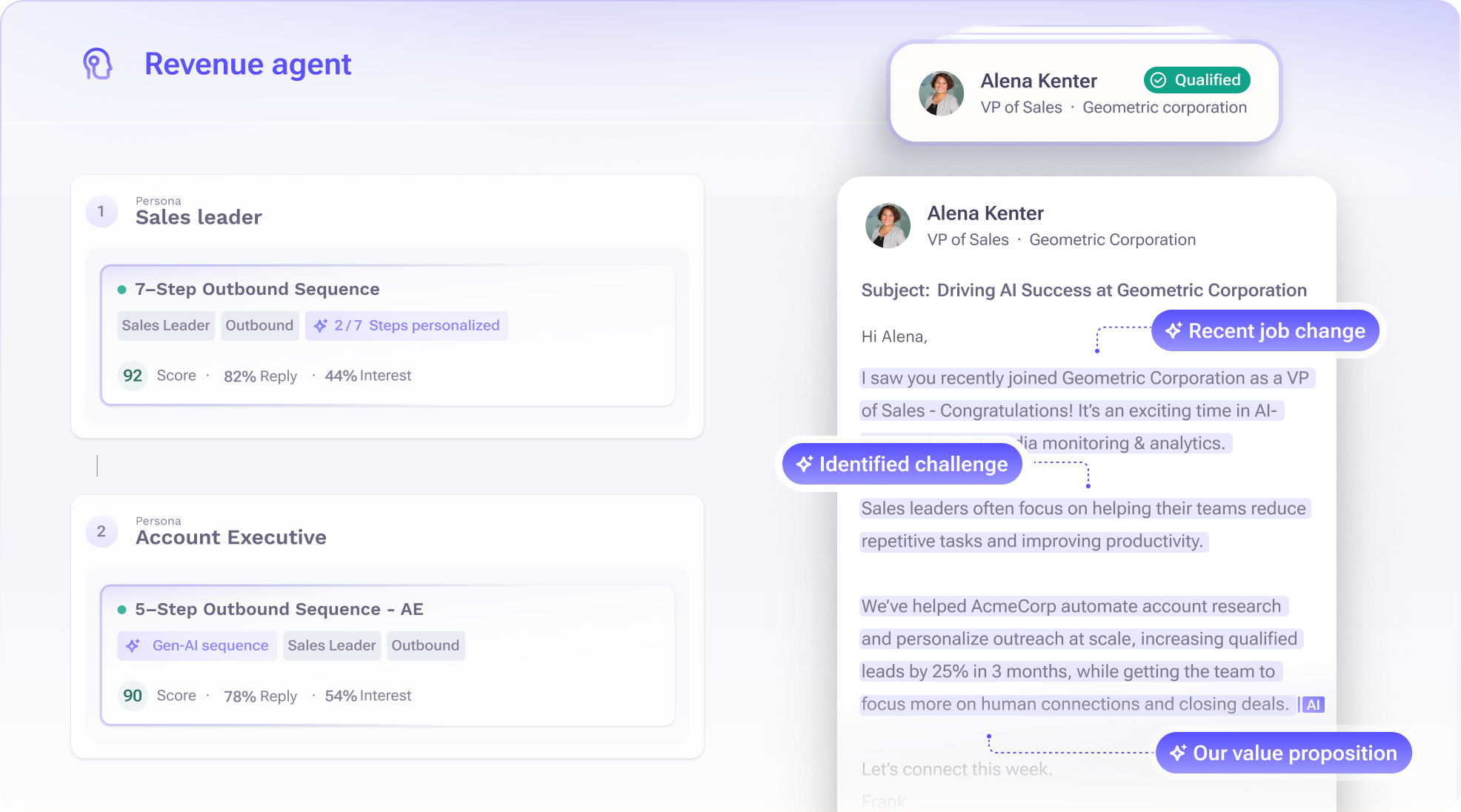
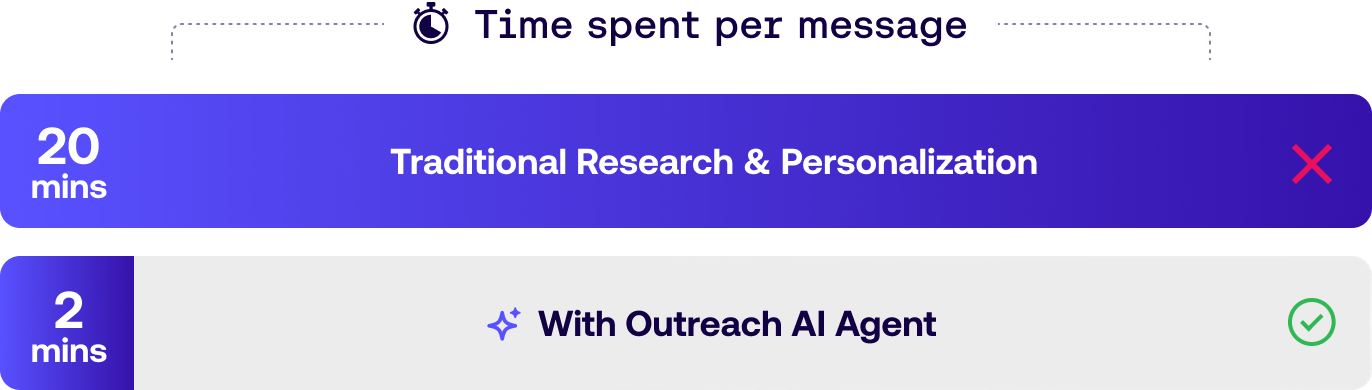
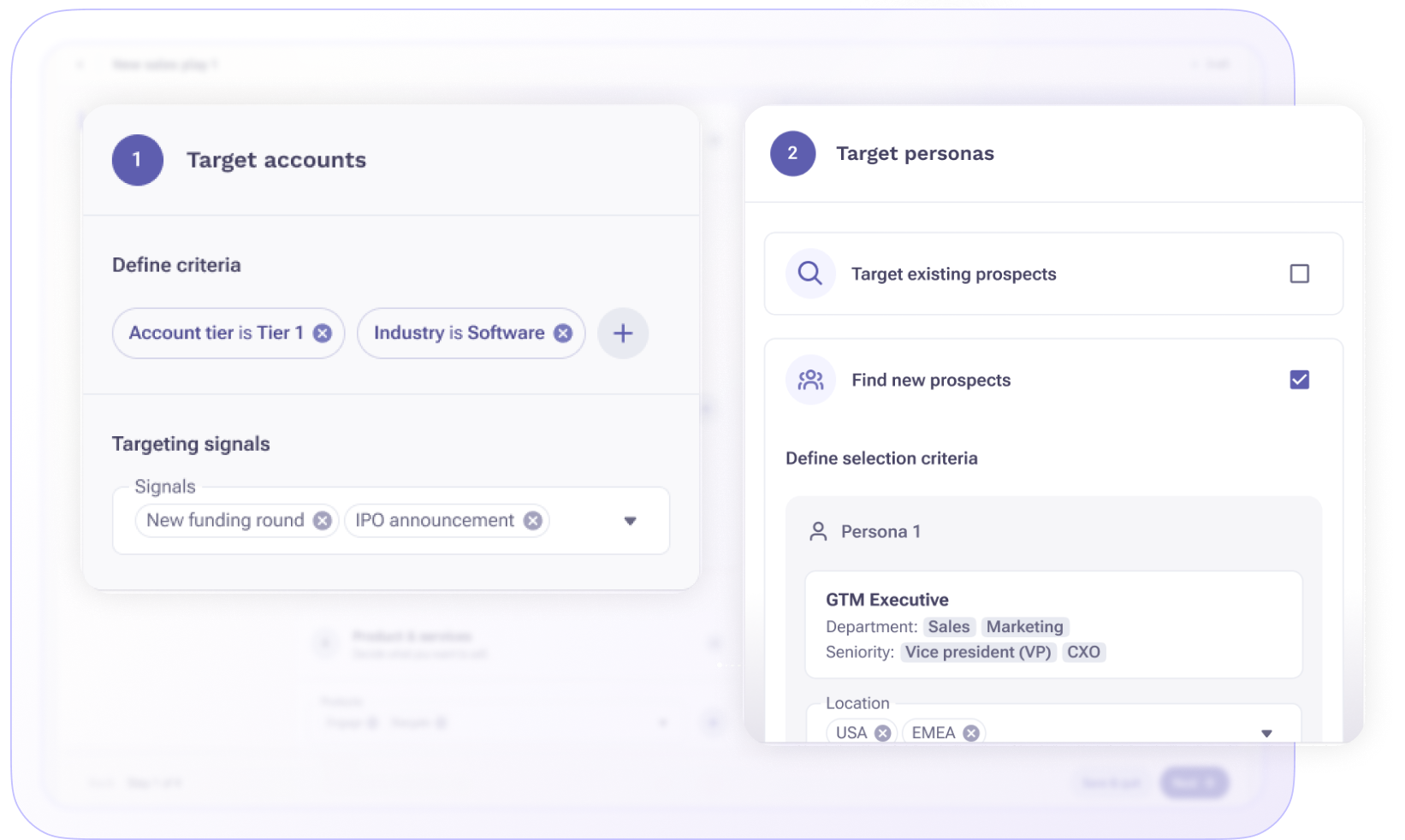
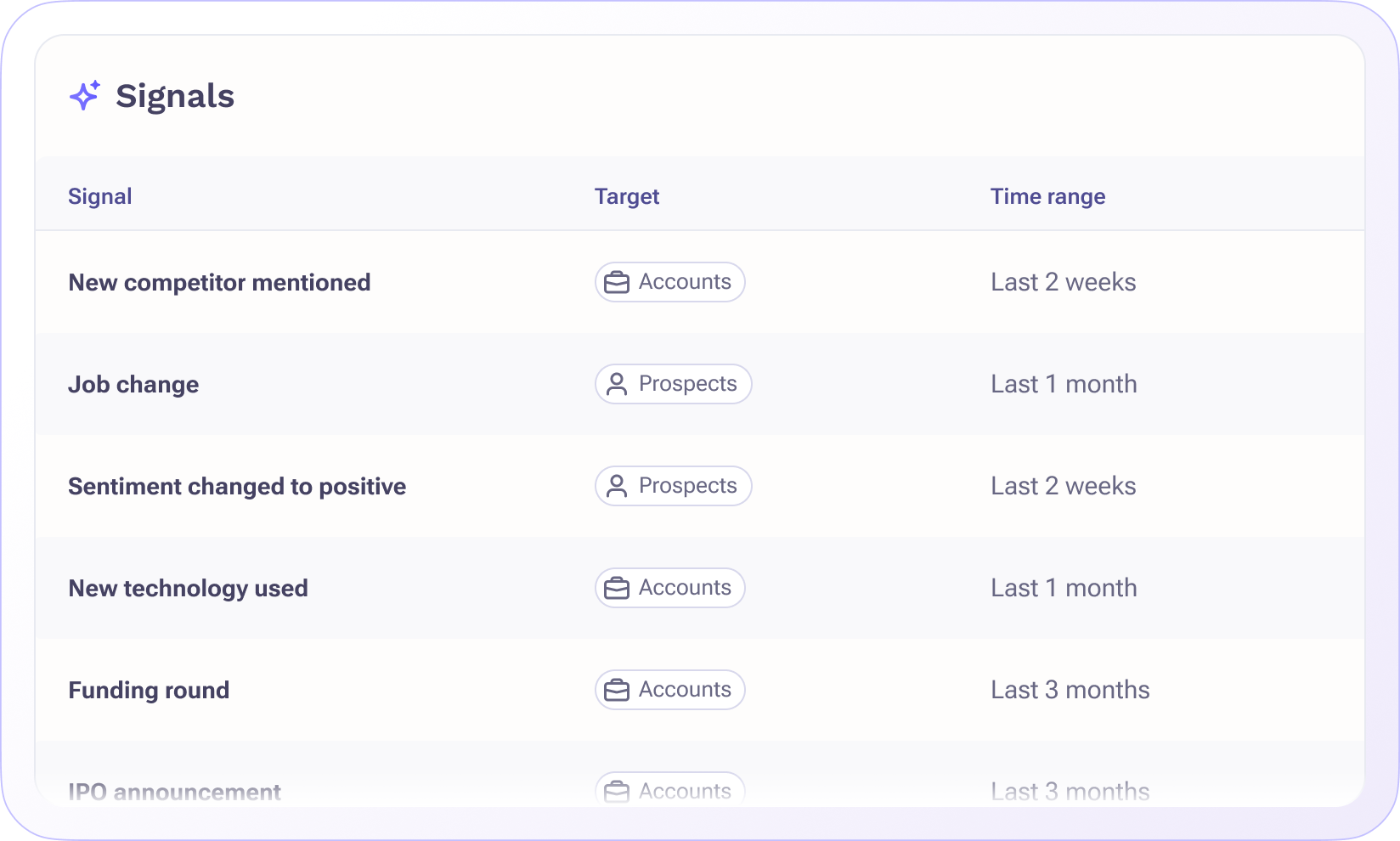
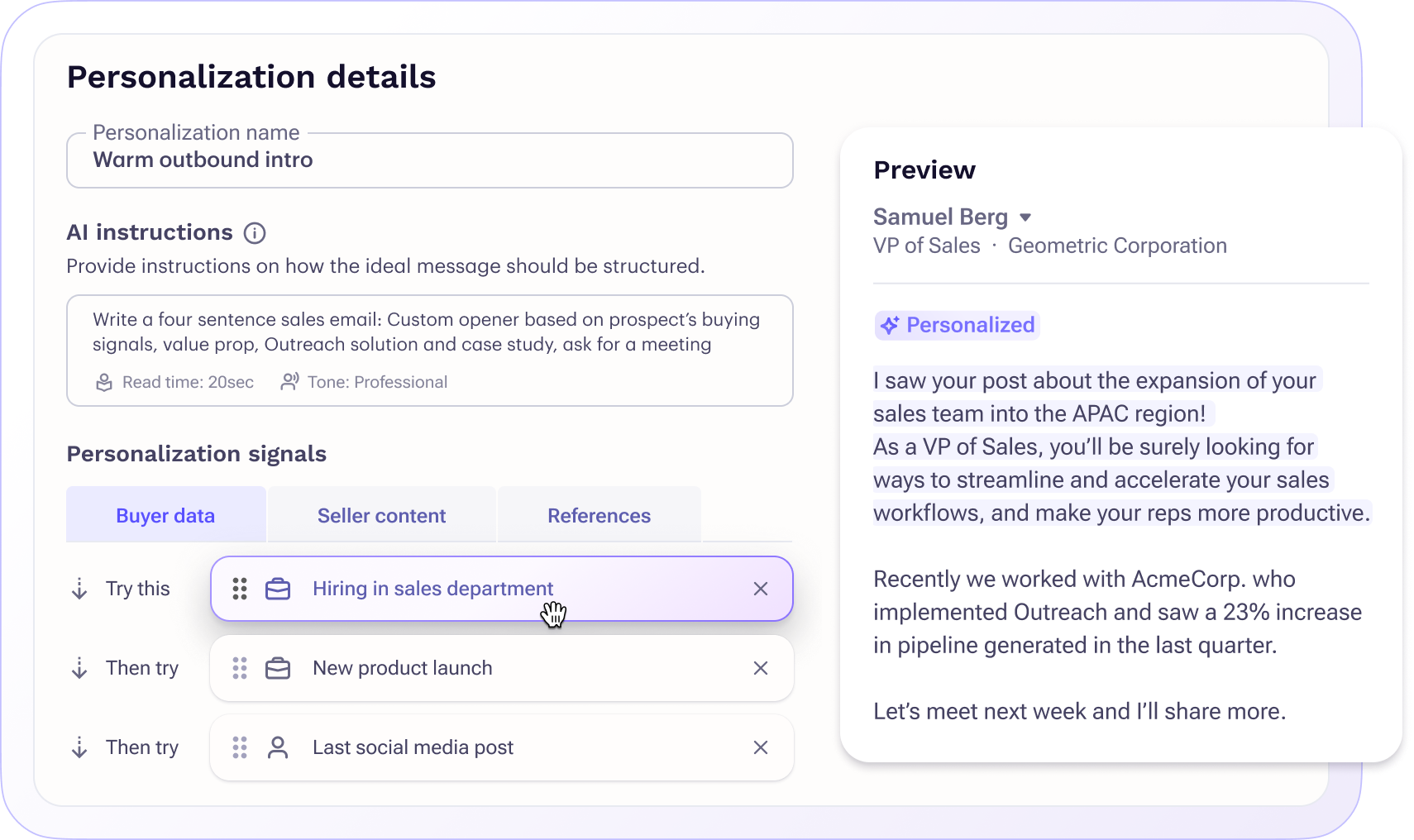
All right. Well, we just heard a great story about leveraging Kaia and conversational intelligence to uplevel coaching and go to market performance. I am here to talk to you all about what is quickly becoming the hottest topic around AI and that is agents. If somehow you've made it this far in the conference and you have not heard about our revenue agents yet, don't worry. You will get a deep dive into the product and our broader vision in future sessions. But here's the high level. Our agents are designed to help your go to market teams scale some of their more time consuming but critical workflows. They can identify the right prospects and accounts to target, enrich those records with meaningful insights, and then generate personalized high quality content on behalf of your teams. So in short, it's like having a teammate that is always working behind the scenes to keep your pipeline full and your Outreach relevant. Today, I wanted to give you a quick behind the look behind the scenes look into how we at Outreach are using AI revenue agents. We actually initially called them prospecting agents, and that's just because that's where we started. As soon as we got this functionality into the hands of our teams, we quickly realized, Okay, actually it can do way, way more than that. So we changed the name. We use agents for lead follow-up, for retention and expansion workflows, for event promotion like Unleash, for renewal management. Right? The list just continued to grow. And the reason for that is really simple. Our revenue agents are incredibly flexible. They can adapt to the workflows that you already have in place. So some of those might call for an agent that is doing the targeting, the enrichment, the personalization. Others, you might already have the workflow in place and you just need to amplify it with AI personalized content to help it scale, right? So it's really not one size fits all. It is truly about what best fits the job to be done. However, with all that said, I am still going to focus today on our outbound prospecting use case because it really is one of the clearest and most powerful ways to demonstrate the full value that our agents can deliver. So our first prospecting use case that we built out internally, we partnered with one of our VPs of sales who wanted to build an agent specifically focused on pitching our forecasting product to new and existing customers. So let's walk through how exactly we set that up. We knew that we wanted to target accounts within our book of business that used a competing forecasting tool already. So we added that as a filter to help the agent hone in on those accounts in particular. We also wanted to focus on two particular segments, enterprise and corporate. From there, to ensure that our pitch was coming at the right moment, we asked the agent to watch out for key signals that indicate to us, Okay, this is a good time to get in front of them and talk to them about forecasting. So the agent watches these accounts and essentially waits until we pick up on a meaningful signal, like a workforce change in the sales department, new product launch, new funding round, new investment. Next, we aligned on who exactly we wanted to target and agreed to pursue director and above titles across sales, operations, marketing, and finance. Next, we decided, all right, what sequence do we want the agent to use to engage these prospects? And we worked to integrate AI prompting into the email steps so that the agent could successfully mix our forecasting value props with relevant account and prospect data and those third party insights to create that personalized messaging. Finally, we wrapped up by deciding who the communication should come from. So for existing contacts, that was the contact owner. For new contacts sourced by the agent, that was the account AE. So you saw the GIF. That was about, I don't know, a minute, minute and a half. Very quick and simple to set up once we knew what we wanted to achieve. The next question is then, Okay, what does this look like for my end users when an agent picks up one of their accounts, right? The biggest value here is that their workflow does not change at all. They are still starting their day on the familiar three sixty degree home page. They start working through their tasks. The primary difference is that when they launch an email where the agent has done the heavy lifting, they simply need to review the output, make any tweaks if they want to make adjustments, and hit Send. It's truly as easy as that. So I know that the text on that screen is a little hard to read. So here's a closer look at the kind of email that our revenue generates automatically for our team. Again, we provided the agent with specific predefined prompting that gives it the context around why it's reaching out, who it's reaching out to, the relevant information, the third party signals, and our own go to market messaging. And this is what it gives us. This email hits all the marks, right? It opens with that timely signal that it picked up on, so the product launch. It then makes a reference to this individual's title, specifically their role at the organization, the things that they probably care about, and why forecasting, especially now, is going to be very important to them. Next, now it's weaving in our go to market messaging and our forecasting pitch, makes another callback to that product launch, and finally ends with a nice, clean, clickable link to book time with the rep. This entire message was generated in a matter of seconds. Right? It's personalized. It's relevant. It's ready for our team to send. Yeah. That's how I feel. All right. And just because these are really fun and I have a little more time, I'll show you one more example from a different use case, very different use case. In this scenario, we've actually prompted the agent to help us respond to a customer who's filled out our NPS survey and given us specific feedback. So So you can tell in this message, we are starting by making a clear reference to the actual feedback that they provided us pulled from that NPS survey. We're then providing a tailored response to, hey, here are some ways that our our platform can address the feedback or the pain points that you gave us today with current functionality and, as always, wrapping up with that classic call to action and a calendar link. Again, this really feels like a true one to one message from our CSMs, but it's being automatically generated through our revenue agent. So what is the takeaway? The idea of AI powered selling is not hypothetical, right? It is real. It is working. It's driving results today for our team, whether that's freeing up our team members to focus on higher value activities, driving more engagement with less effort, or turning one time campaigns into repeatable and high impact plays. Revenue agents are already dramatically changing how our team sells. And hopefully, they can do the same for you. So if you are curious, please come visit our booth at the Hub. We have an AI Revenue Agent booth. We would be happy to do a deep dive demo, let you play around. But until then, thank you for your time. Happy Unleash.