Step 1
CRM trigger fires
CRM
Solves for closed-lost deals that get overlooked because there’s no structured, repeatable way to revisit them at the right time.
Re-engagement fires automatically when the account is likely to take another look, so no opportunity sits forgotten.
The outreach picks up where the last conversation left off, which is what makes a win-back feel earned rather than random.
Manual follow-up on lost deals comes off your reps' plates, so the team can spend more time on the work that matters.
Outreach connects to the CRM and tools your team already uses, then layers on AI agents that handle the manual work a rep would otherwise do. Here's the full path, from an aging closed-lost opportunity to a personalized win-back motion:
Step 1
CRM trigger fires
Key stakeholders identified and engaged
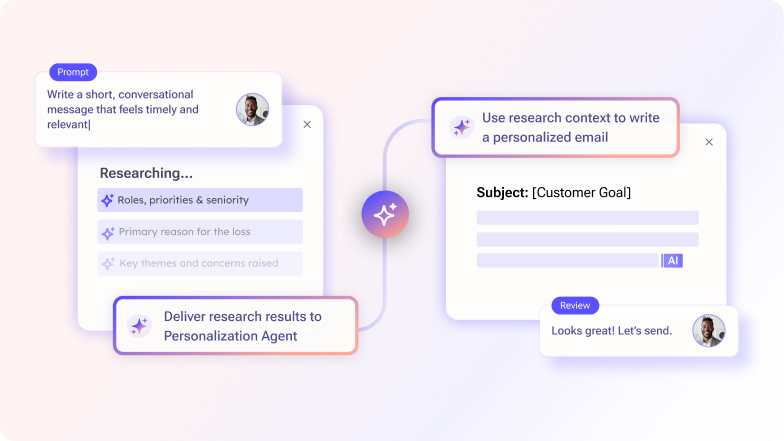
Research Agent extracts context
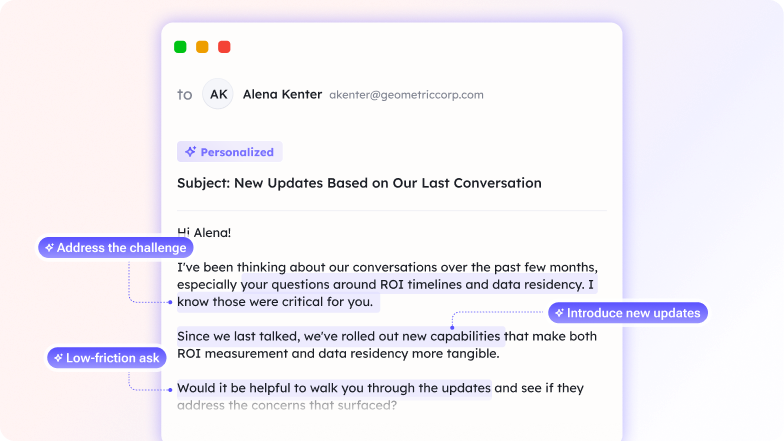
Personalization Agent drafts messaging
Re-engagement sends automatically
Once an opportunity has been closed-lost for a set period (say, 9 months), an automated trigger activates.
Associated contacts from the opportunity are added into a personalized sequence on behalf of the rep.
It pulls insights from conversation history to rebuild the full picture, including objections and the reason for the loss.
It addresses priorities and any relevant updates that make this the right moment to reconnect.
Timely, context-rich outreach goes out to kick-off another conversation.
In Outreach, an agent is set up once with plain-language instructions. No code. You tell it what to look for and what to produce. Here's how the agents in this recipe work together: one to gather context, one to turn it into a message.
When is the best time to reach out to a closed-lost account?
Research shows the sweet spot is 3-6 months after the loss, once they've had time to live with their decision. This recipe monitors closed-lost deals and auto-triggers outreach at the optimal window based on deal closure date and buying signals.
How does the agent know why we lost the deal?
The Research Agent pulls context from your CRM notes, deal stage history, and conversation logs to understand the reason for loss (price, product gaps, timing, competitive loss, etc.). It then crafts messaging that directly addresses the original objection.
Should I reach out to the same contact or new stakeholders?
The recipe prioritizes reaching the original contact but can also identify new stakeholders in the account who may have changed priorities (new job changes, hiring patterns, funding rounds, etc.). It recommends the best target based on available signals.
What if they've already bought from a competitor?
The agent factors this in. If the account has already signed with a competitor, the recipe shifts to a "competitive displacement" angle: "We know you chose [competitor]. Here's what we do differently now..." This is lower probability but still worth the effort.
How many win-back attempts should I make?
We recommend 2-3 touches over 60-90 days. The recipe auto-sequences these if the prospect doesn't respond. Most recovered deals come after the second or third attempt, when timing has shifted.
What's a realistic recovery rate?
Most teams recover 5-10% of closed-lost pipeline using this recipe. That might not sound like much, but across a sales org, it often adds up to 500K-1M+ in recovered annual pipeline.


Diagnose customer churn
See what drove the loss, what signals appeared early, and where future win-back opportunities may exist.
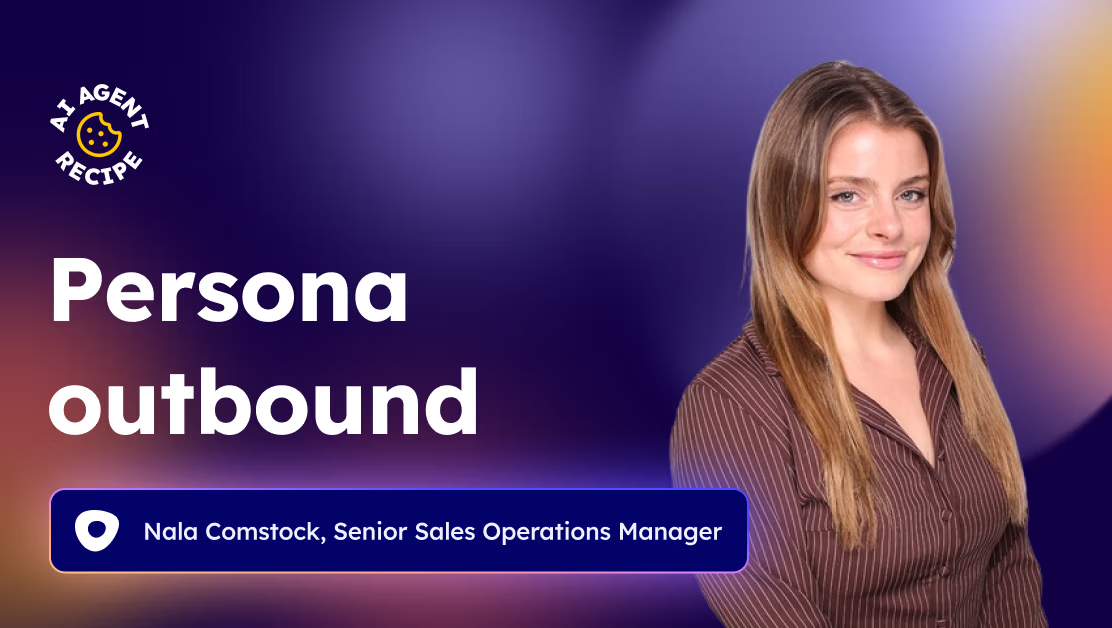
Engage the right buyers
Reach people who shape the decision with targeted messaging that speaks to their role and reality.
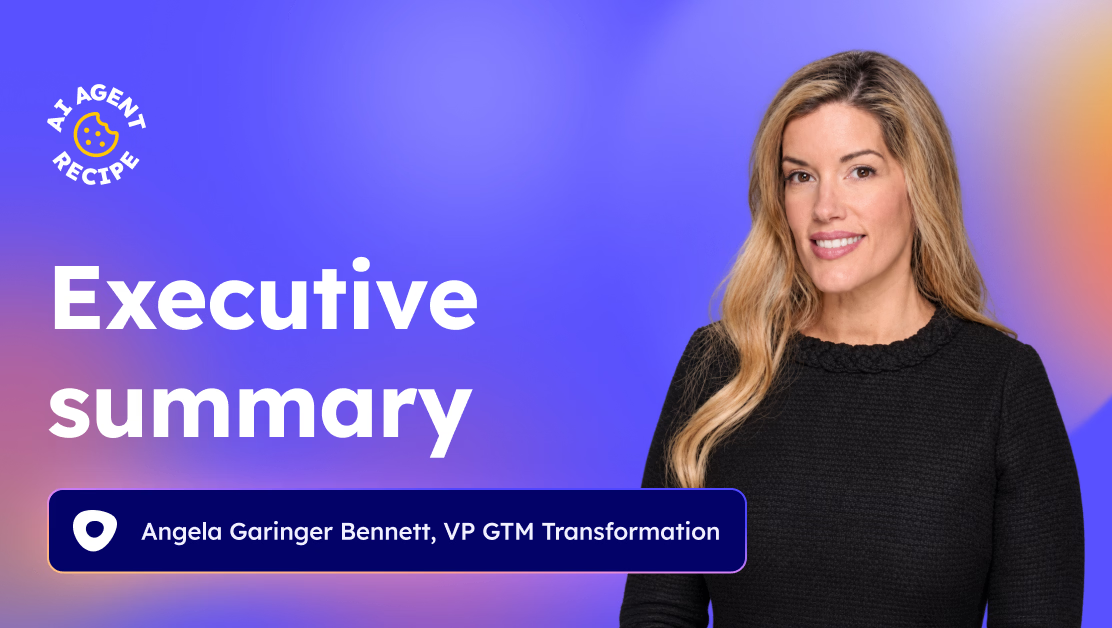
Prep for key meetings
Get the full account picture with recent activity and strategic deal context in one exec-ready summary.
