Blog
How to improve sales performance across your revenue team
October 1, 2026
Read more

TL;DR: Traditional touchpoint analysis shows what happened. Agentic AI reveals what happens between interactions — and helps revenue teams execute faster when it matters most.
Sales teams have long relied on touchpoint analysis to understand what drives successful deals; how many stakeholders are involved, how often reps engage, and which interactions move opportunities forward.
That analysis still holds value, but it misses something critical: what happens between those interactions. In practice, outcomes are shaped less by the number of touchpoints and more by how quickly and consistently teams act in the moments that matter.
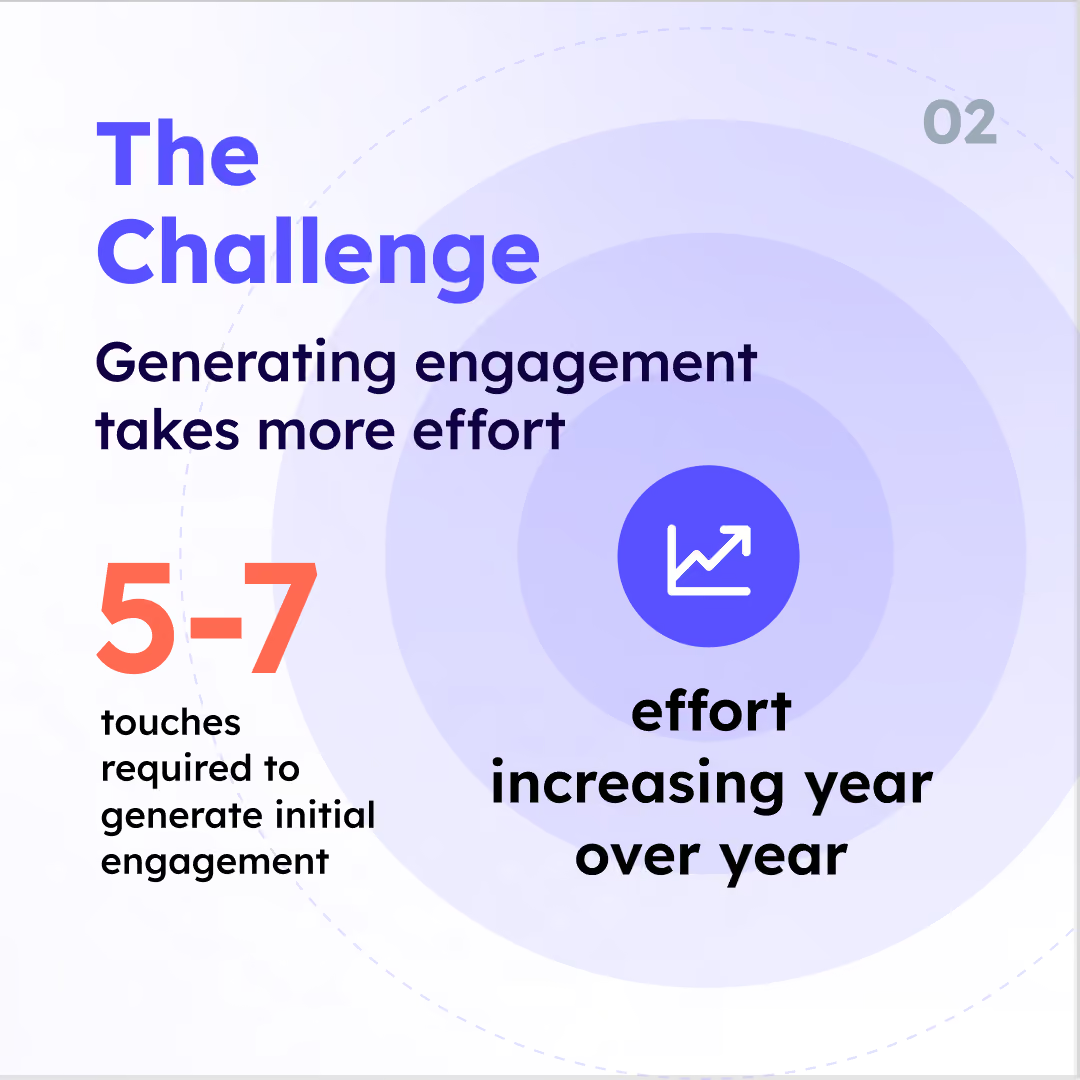
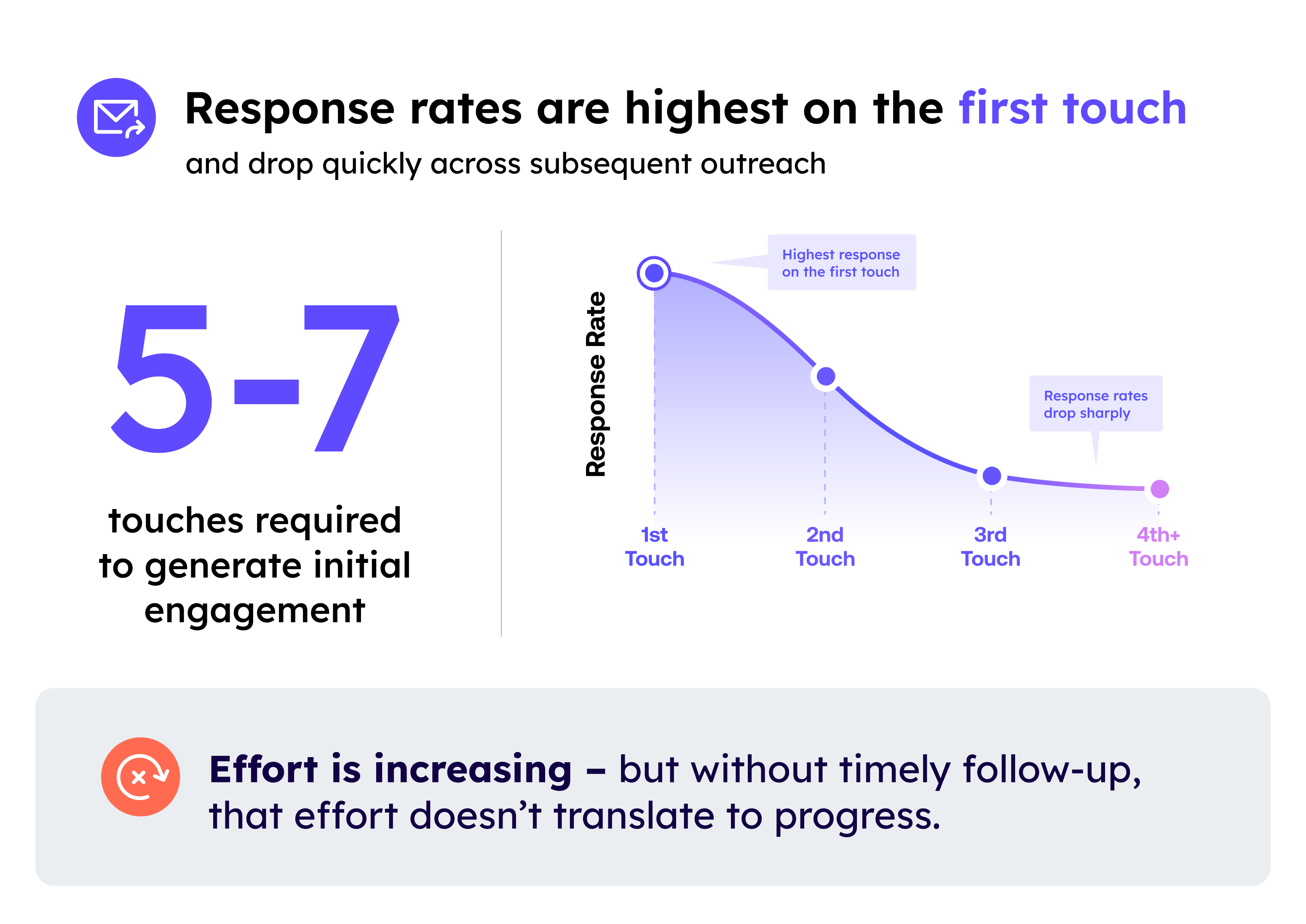
It now takes more effort to generate engagement, often five or more touches for an initial response, and closer to seven for cold outreach, with required effort increasing over time.
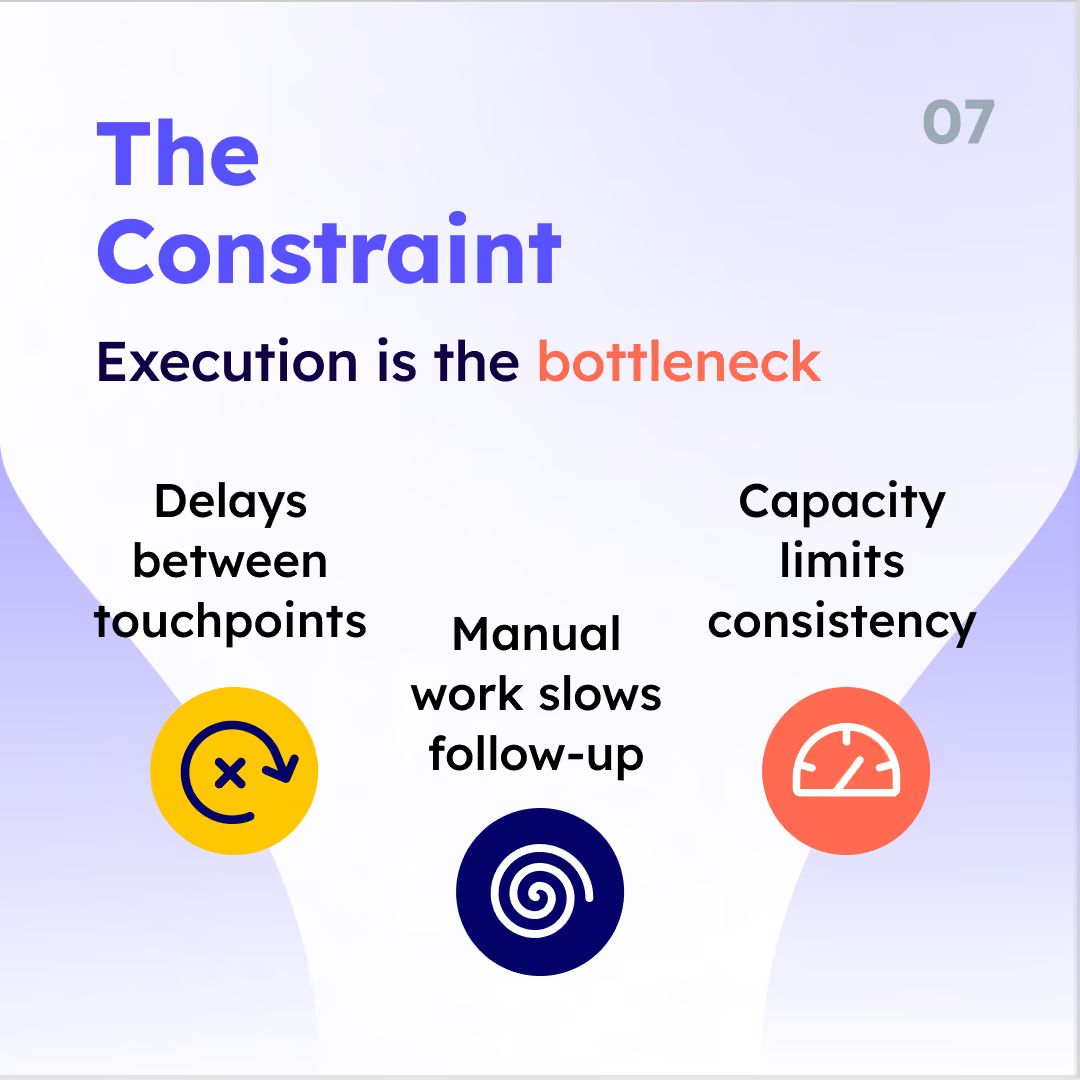
In a market where buyers are increasingly selective about what earns their attention, every delay introduces friction. Every missed follow-up slows momentum. And in complex, multi-threaded deals, those gaps (not the absence of activity) are where deals are lost.
Across industries, high-performing sales teams share a few common traits:
These patterns show up again and again in sales data.
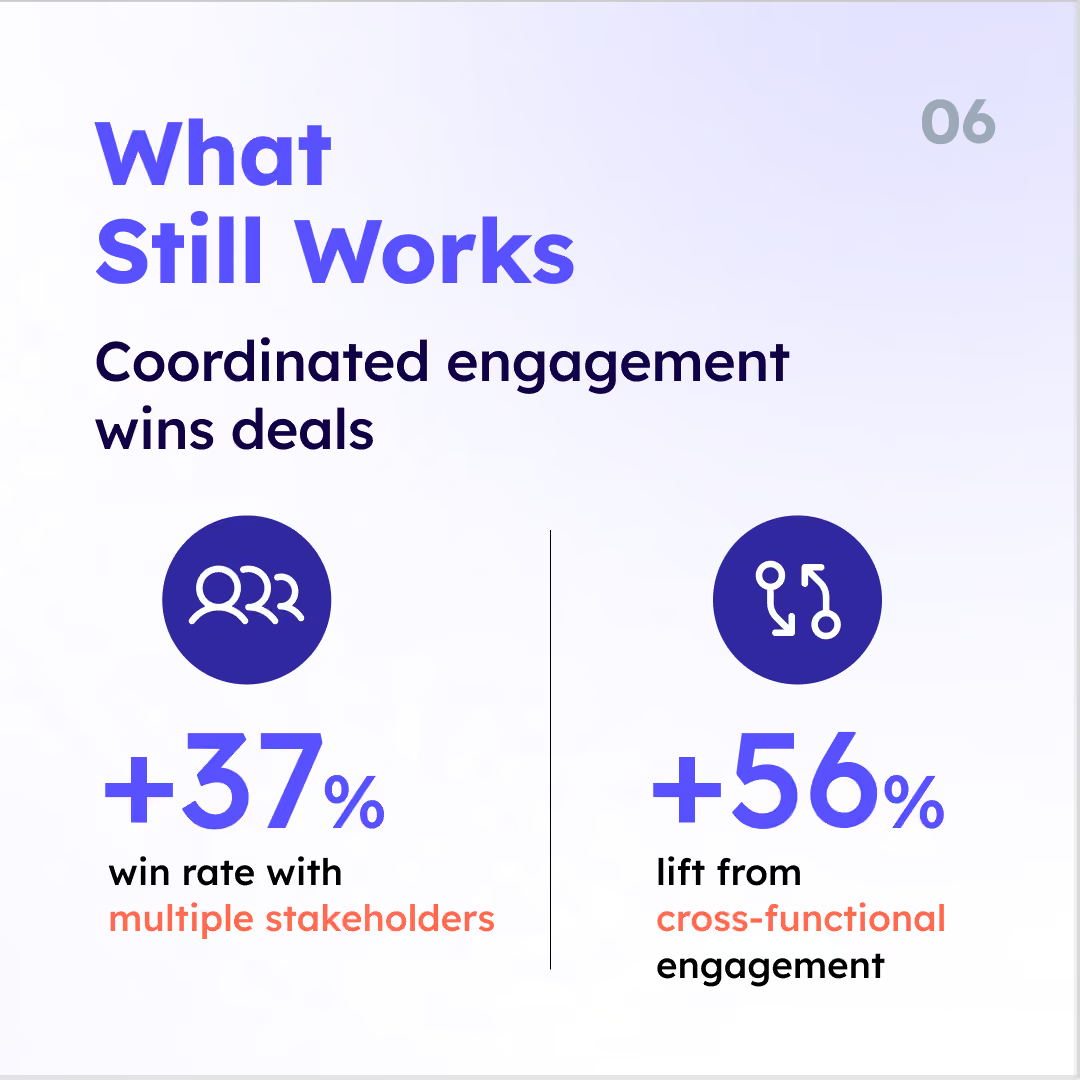
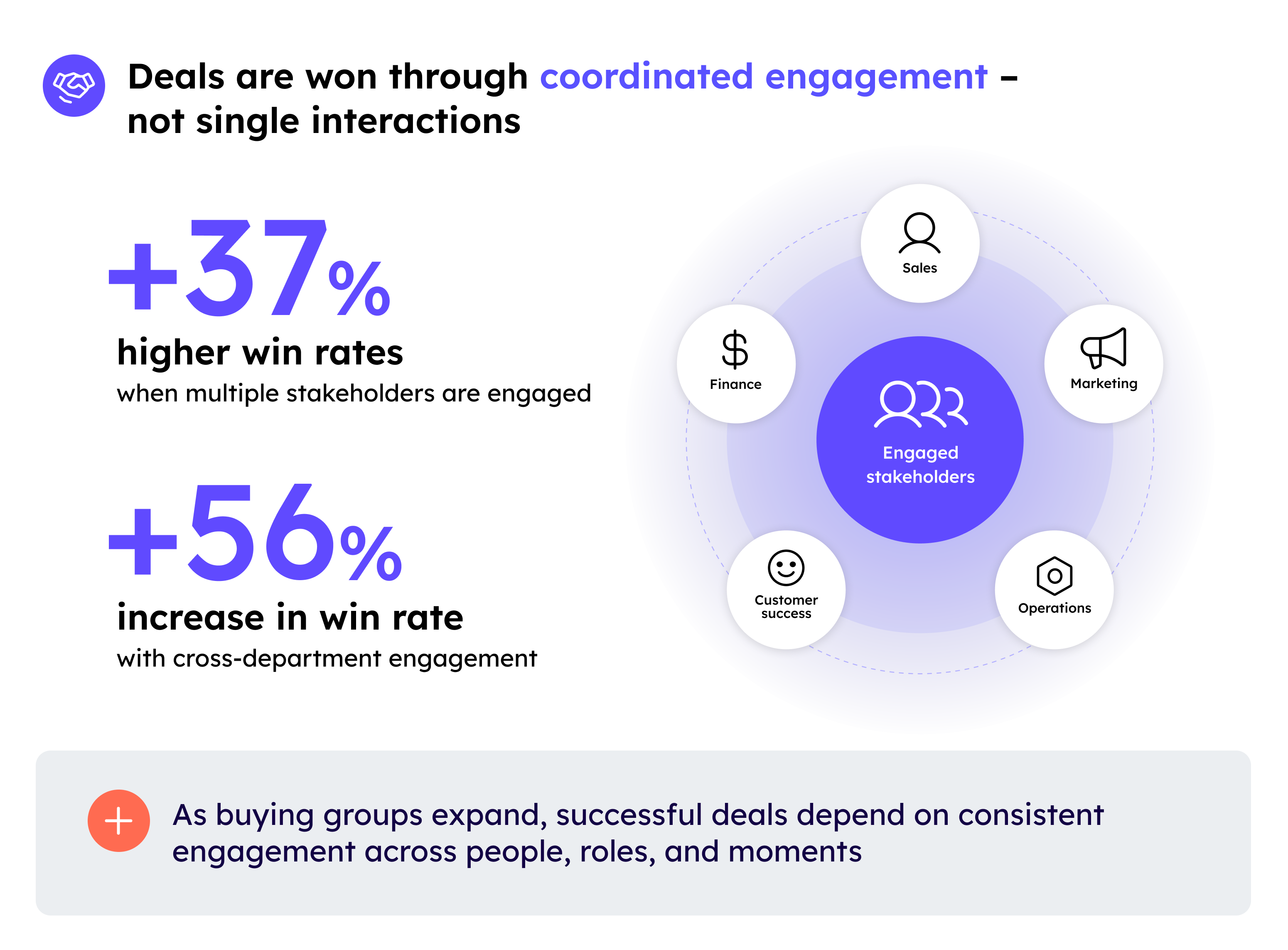
Deals are rarely won through a single thread or a single interaction. They’re built through coordinated engagement across people, roles, and moments. Deals with more than one engaged contact are significantly more likely to close, reinforcing the importance of multithreading across stakeholders.
But knowing what strong deals look like is only part of the equation.
Most sales analyses focus on the interactions themselves.
What they don’t capture is what happens between them, including
These moments are where momentum is either maintained or lost.
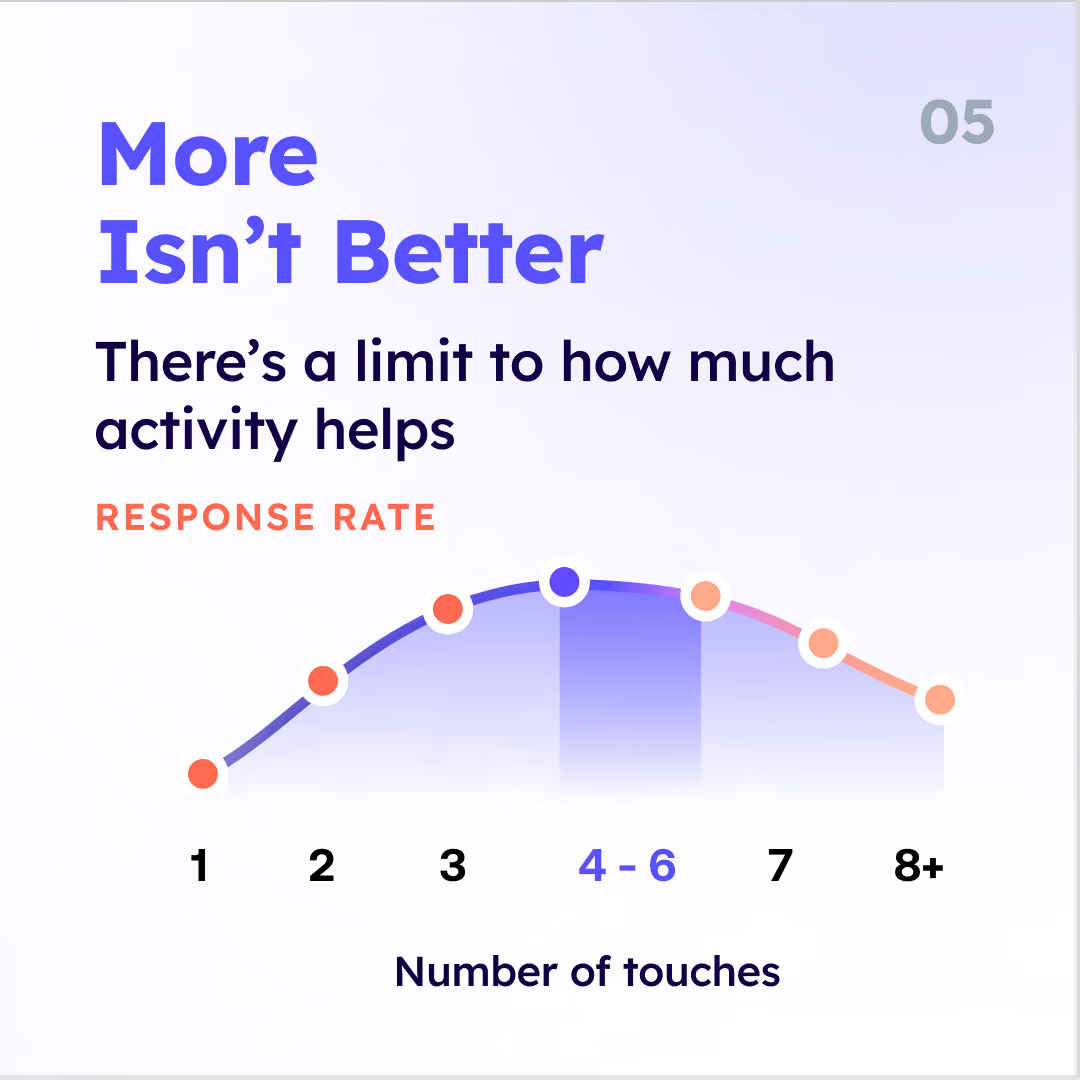
The first interaction carries the highest likelihood of response, with engagement dropping quickly across subsequent touches.
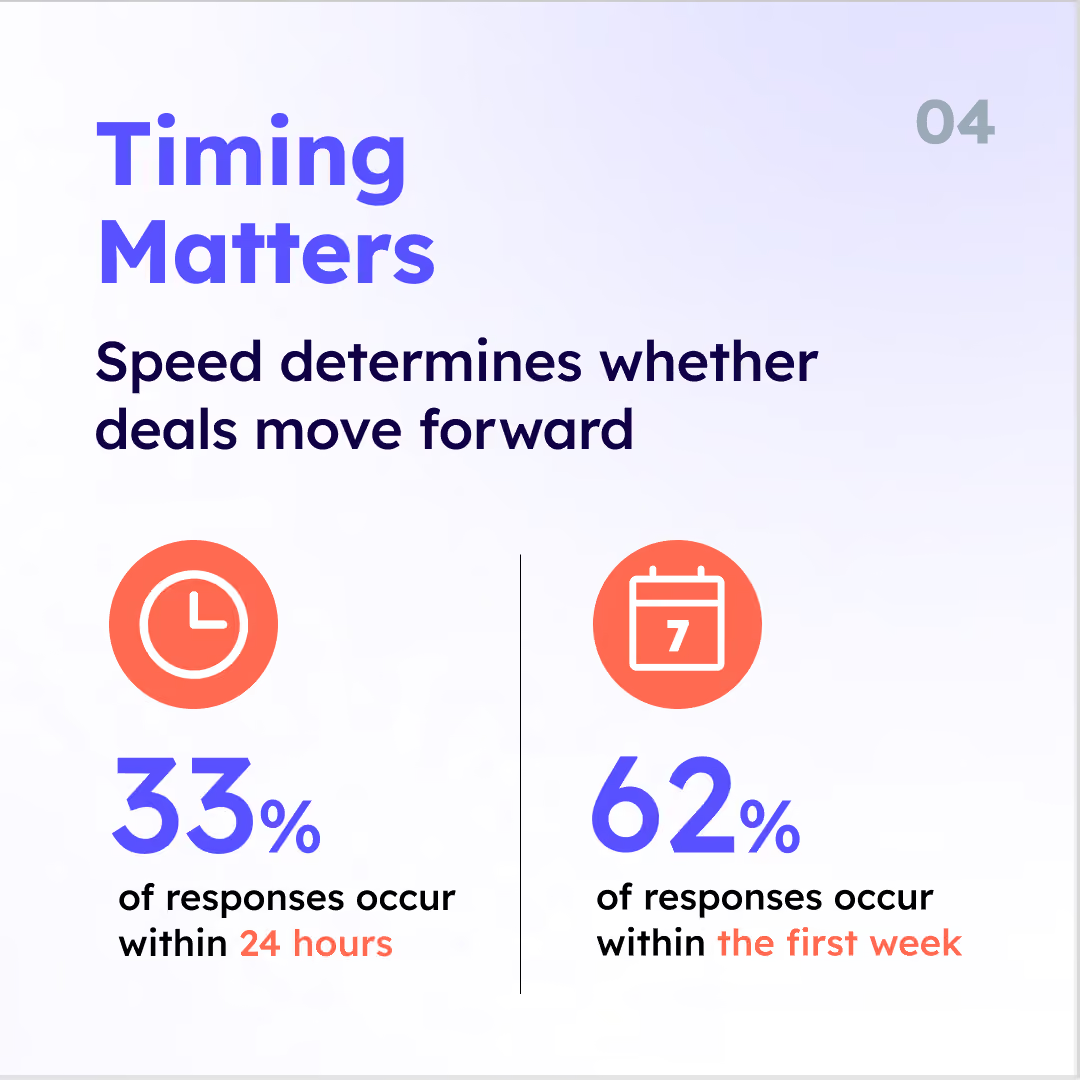
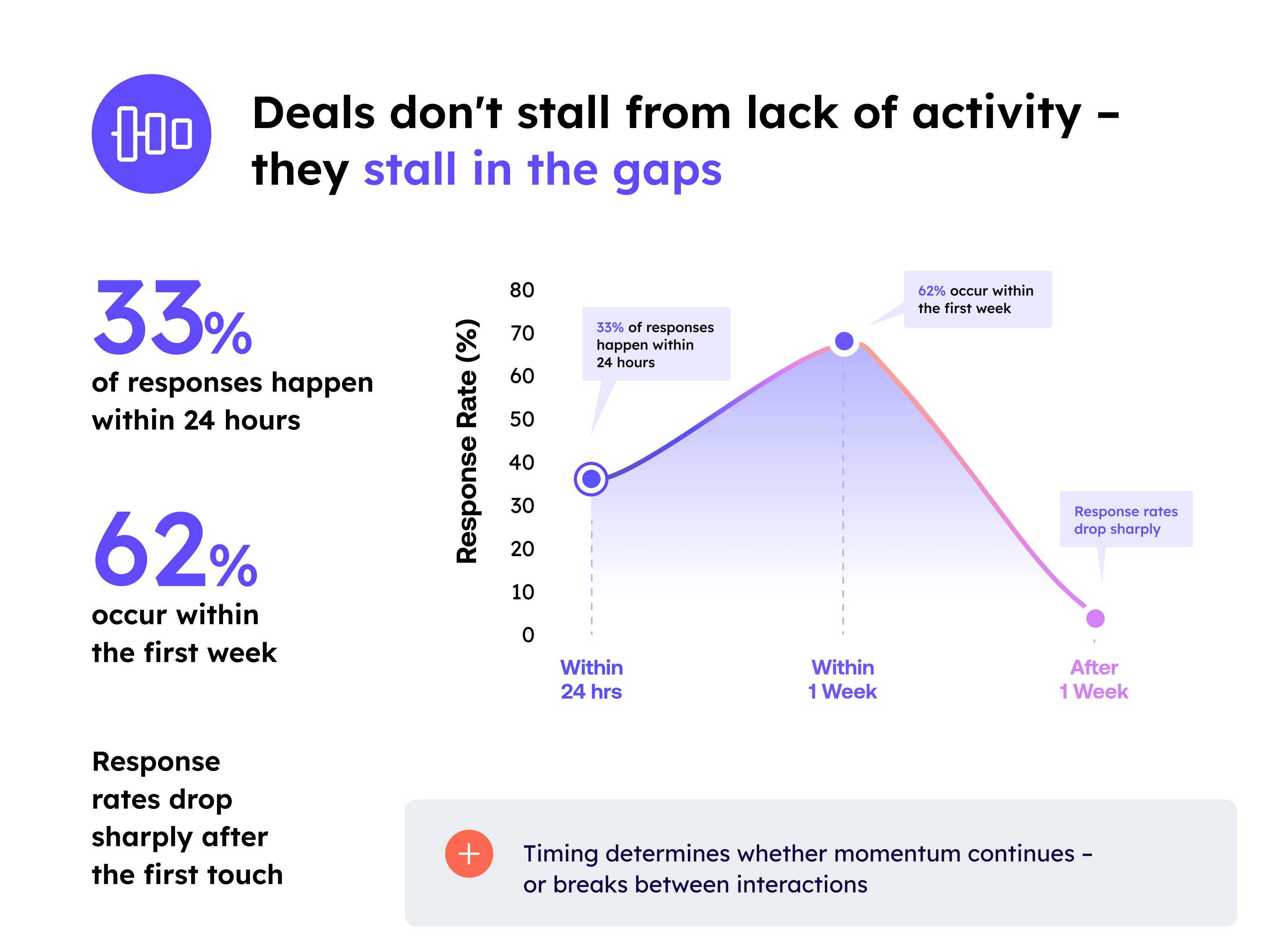
Timing plays a critical role because buyer attention windows are becoming shorter and more competitive: roughly one-third of responses occur within the first 24 hours, and more than half within the first week, making speed a key factor in whether opportunities progress.
In other words, sales performance is influenced not only by the quality of interactions, but also by how quickly and consistently teams respond in those moments.
Every touchpoint carries a hidden cost:
Individually, these tasks seem small. But across dozens of deals, they add up to create a capacity constraint that limits how effectively teams can execute.
At the same time, the number of required touchpoints continues to increase; putting additional pressure on already constrained seller capacity.
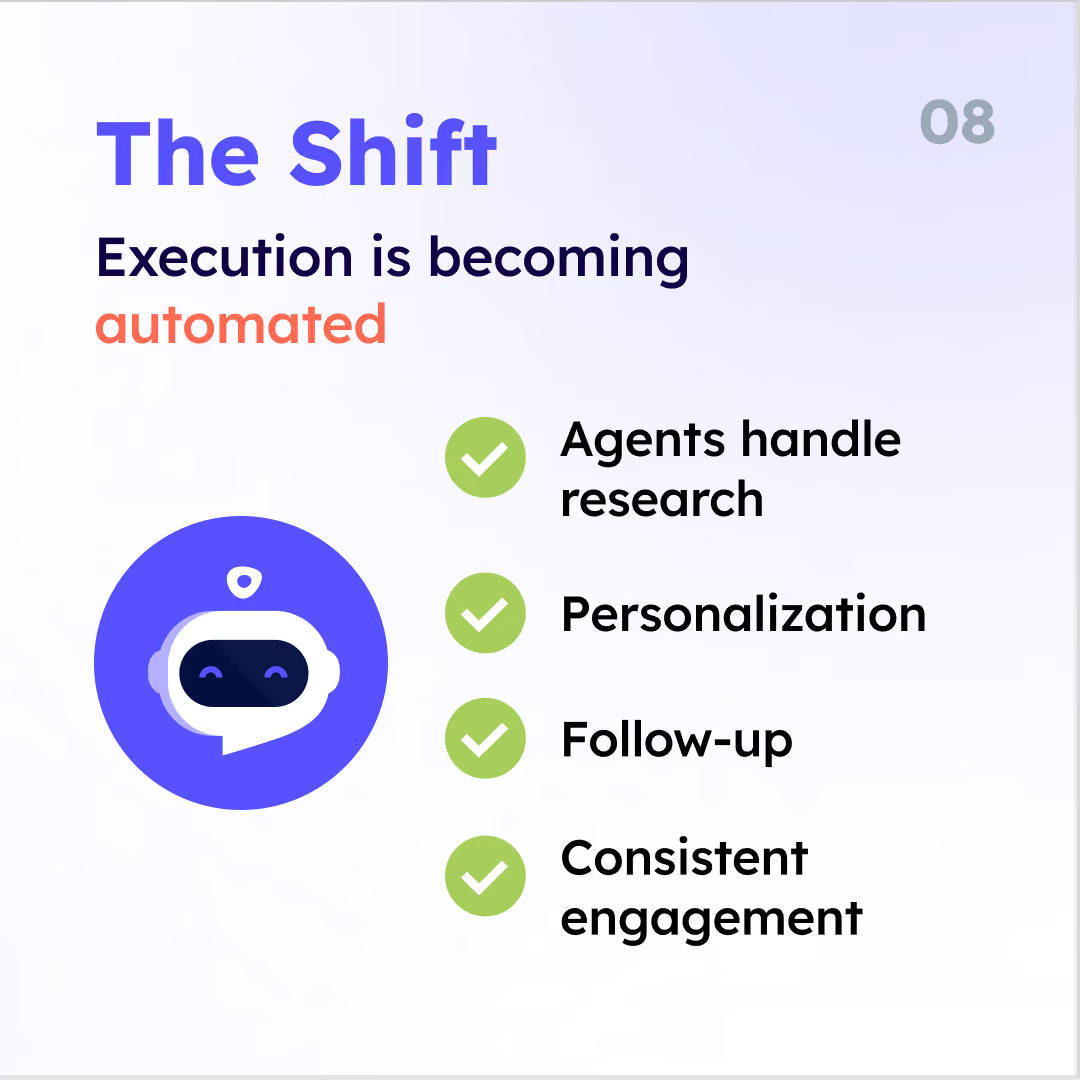
Recent data shows that AI agents can save sellers up to 10 hours per week by automating research, personalization, and follow-up tasks; while also improving performance outcomes like reply rates and conversion.
In some cases, this means eliminating execution gaps entirely, ensuring that no leads go untouched due to rep delay.
Meeting preparation alone can be reduced by up to 50%, allowing sellers to spend less time gathering context and more time engaging with customers.
This changes how we think about sales cycles: teams face not only the task of generating touchpoints, but also ensuring they have the capacity to follow through on them effectively.
This changes how teams approach the sales cycle. Instead of analyzing results after the fact, leading teams are focused on executing in real time — ensuring that follow-ups happen immediately and momentum isn’t lost between interactions.
That shift is being driven by a new class of agentic capabilities that execute work on behalf of sellers — handling time-intensive tasks like research, personalized messaging, and follow-up. These workflows are powered by AI agents including:
“We’ve seen overwhelmingly positive feedback from teams using Meeting Prep Agent and AI-powered meeting summaries.”
— Cam Anderson, Sales Enablement Manager, Avis Budget Group
In practice, this means teams no longer have to wait to act. Agents can respond to inbound leads instantly, generate tailored outreach based on account context, and keep deals moving without delay.
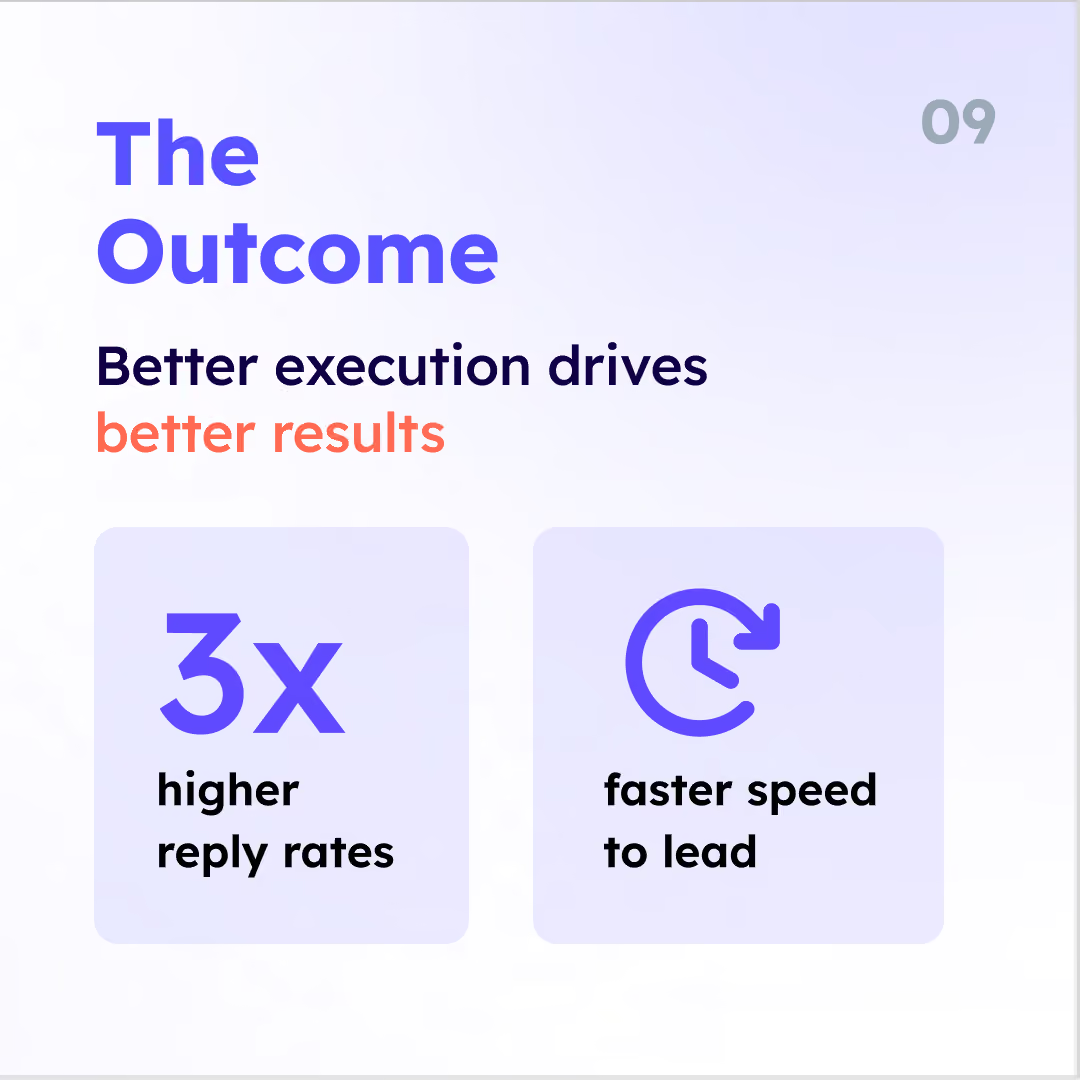
Teams using these approaches are seeing measurable gains — not just in efficiency, but in outcomes. In some cases, this includes up to 3x higher reply rates and dramatically faster speed to lead, ensuring that opportunities are engaged at the moment of intent.
Instead of waiting to analyze what happened, teams can act immediately; removing the gaps between touchpoints that typically slow things down.
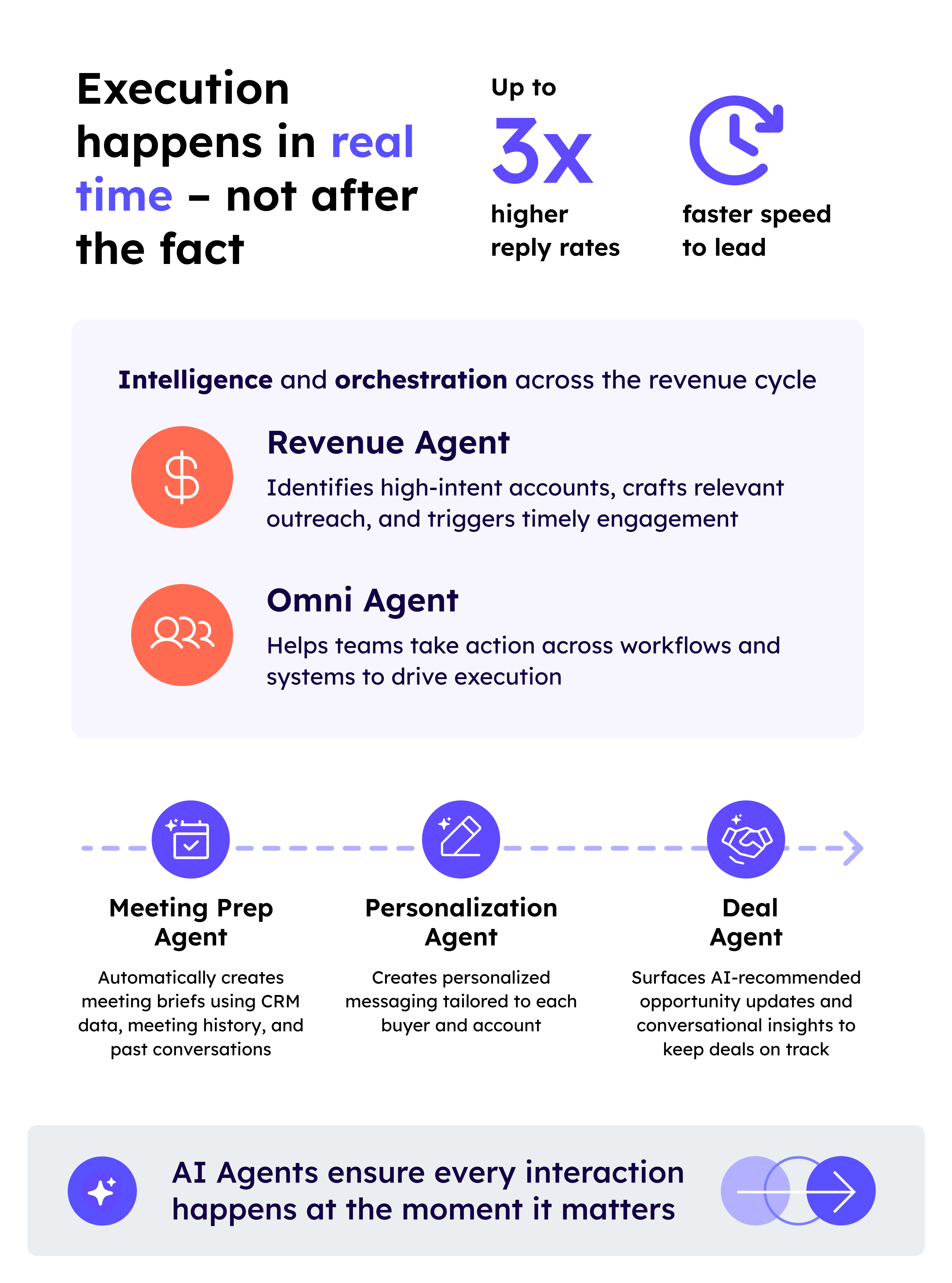
Automate research, personalized messaging, and follow-up so sellers can focus on conversations that move pipeline forward.
Touchpoints still matter. But on their own, they’re not enough.
Today’s agentic, orchestrated workflows act on behalf of sellers — handling research, personalization, and follow-up to reduce day-to-day friction and reclaim time that can be spent building the relationships that actually close deals.
To improve outcomes, teams need to:
In practice, this means shifting from:
Agents take on the manual work around selling — coordinating follow-up, surfacing signals, and helping teams maintain momentum across every interaction.
That orchestration allows sellers to spend less time managing the process and more time building the relationships that actually move deals forward.
Activity still matters, but what separates teams now is how consistently they follow through on it, with agentic workflows helping ensure that execution happens quickly and reliably at every stage of the deal.
Sales cycle analysis evaluates how opportunities progress through the buying process, including stakeholder engagement, touchpoints, and the activities that influence deal outcomes.
Sales cycles often slow when teams delay follow-up, miss buyer signals, or spend too much time on manual tasks such as research and preparation.
Momentum is lost when sellers fail to respond quickly after meetings, inbound inquiries, or buying signals.
AI automates research, meeting preparation, personalization, and follow-up so teams can act faster and more consistently.
AI agents can save sellers up to 10 hours per week by reducing administrative work.
H3: How does meeting preparation affect sales productivity?
Meeting preparation can be reduced by up to 50%, giving sellers more time to engage customers.
Speed to lead measures how quickly a team responds to an inbound inquiry or buying signal.
Agentic workflows are AI-driven processes that complete tasks on behalf of sellers, including research, drafting emails, and coordinating follow-up. Agentic workflows are AI-driven processes that complete tasks on behalf of sellers, including research, drafting emails, and coordinating follow-up. By reducing delays between interactions, they help teams maintain momentum and execute more consistently throughout the sales cycle.
H3: Why is execution more important than activity?
The number of touchpoints matters less than how quickly and consistently teams act on them.
Touchpoints are buyer interactions; execution is the work that happens before, between, and after those interactions.