Blog
How to improve sales performance across your revenue team
October 1, 2026
Read more
AEs: they just ain’t what they used to be. They’re more. We don’t have to tell you the selling landscape has changed, you can feel it in your day to day and you’re seeing it in your bottom line. But Account Executives are feeling the squeeze uniquely compared to the rest of your sales org.
AEs are at the forefront of the latest sales technology changes, they felt the direct impact of the Great Layoffs of 2023, lead revenue strategy tweaks, and adapt to your shifting customer base.
We’ve already declared 2024 the year of the Come Up, not just a Come Back. How you manage your AEs through this will decide that.
Account Executives are coming in early and staying late, at least in the sales cycle. When sales teams are expected to be leaner and meaner than ever before, AEs can no longer solely rely on MQLs and opportunities sourced by SDRs. AEs are doing more of their own prospecting than they have in the past, all in the spirit of creating more efficient sales teams.
But this does not ignore the question of time. AEs are still operating with the same number of hours in a day.
If your AEs are spending more time pounding the pavement while chasing the same benchmarks, it’s time to review goals, commission structure, and tech stack. You cannot afford for AEs to get discouraged and lose steam. Without the right motivation or tools, this expansion of AE scope could detrimentally impact your sales cycle.
Tech will make or break this new AE reality, but it’s also one of the reasons more is expected of AEs than ever before. The efficiencies and insights of AI assists and Prospecting Technology helped create these new AE expectations. But when this expectation has expanded to organizations without these tools, getting your techstack in tip-top condition will be crucial.
Because in addition to more prospecting, AEs are becoming more involved in account management – particularly in regard to renewal and expansion. If your tech stack isn’t prepared to support and inform AEs beyond prospecting, you are putting them at a disadvantage. If your AEs are more involved in account management, including expansions and renewals, they will need access to the same tools and information your CSMs and AMs have to contribute adequately.
As you review your goals and commission structure, analyze your prospect and customer management tools to ensure that AEs have the information they need to sell effectively.
For years, growth was the name of the game. Everyone had New Logo tunnel vision. But then budgets were cut, buyer trepidation grew, and boards wanted answers. Exponential growth became much less likely.
Customer acquisition costs have spiked, but selling to existing customers is cheaper and easier. The likelihood of selling to a new prospect ranges from just 5-20%, but the probability of selling to an existing customer ranges much higher — from 60-70%.
Buying decisions increasingly require coordinated engagement across multiple stakeholders. Outreach’s latest sales cycle analysis reinforces the importance of maintaining momentum through timely, consistent execution across the buying group. For expansion and renewal opportunities, that means staying engaged with the right stakeholders, acting quickly on customer signals, and reducing the execution gaps that can put existing revenue at risk.
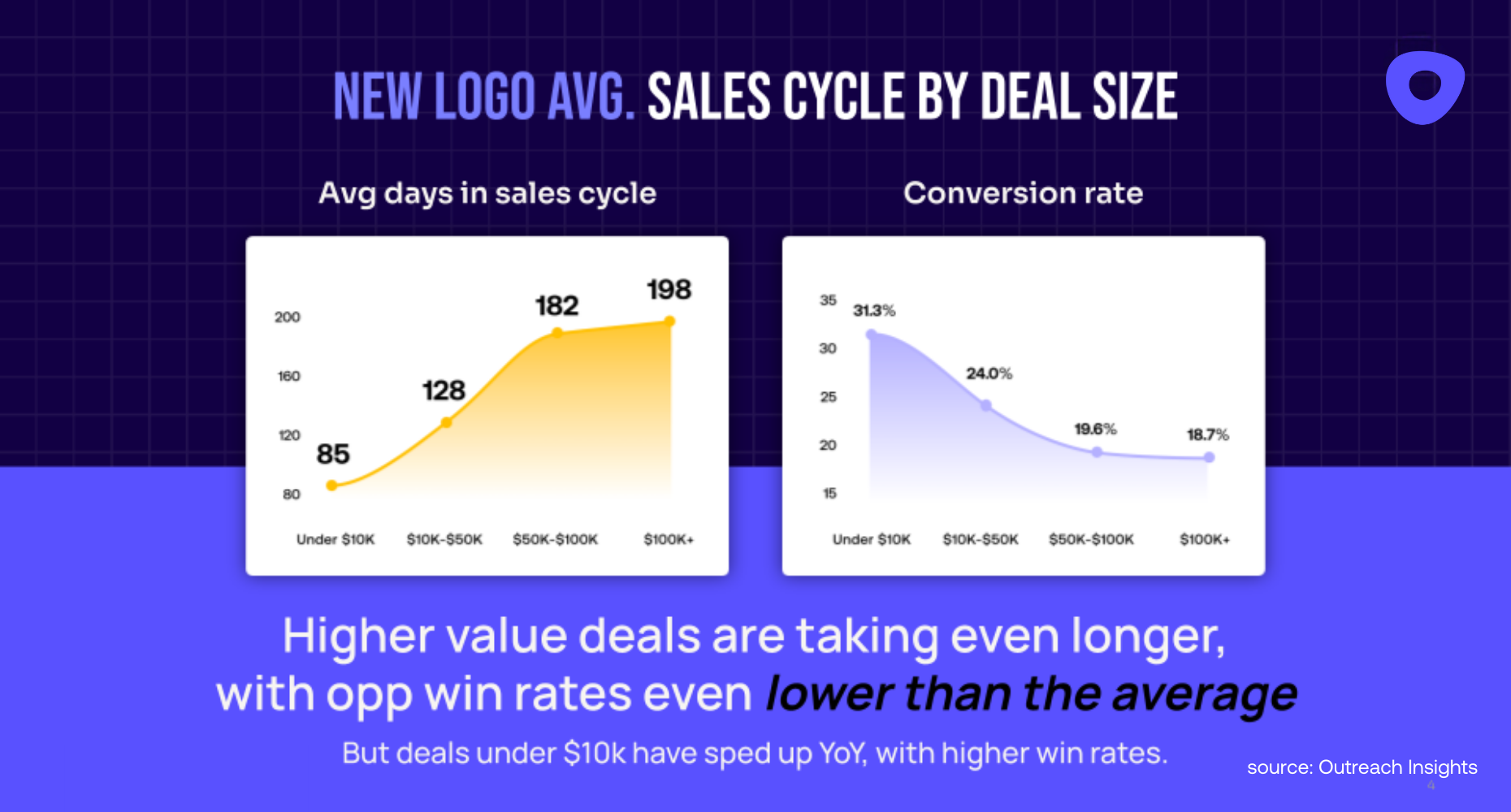
Buyers are still looking for change and improvement, they just need a lower risk environment – a near perfect argument to prioritize expansion. Upsell and expansion opportunities are lower risk and, typically, lower cost than core packages.
Meeting customer needs and expectations isn’t just the right thing to do, it’s the profitable thing to do. Customer engagement has become everyone’s job. When expanding and renewing are sales efforts, more AEs are becoming integral to customer retention strategies. And they’ll need the right tools and support to do so.
More hands on deck don’t necessarily make selling and renewing easier. Buyers require sustained engagement, and Outreach data shows that generating a response increasingly takes multiple touches. At the same time, timing matters: delays between interactions can cause momentum to fade. Giving AEs the right technology and workflows can help them execute consistently without simply adding more activity.
The secret to defeating prolonged sales cycles could lie in how your teams communicate, internally and externally. Meaningful communication, particularly incorporating meetings, can speed up and effectively close more deals – for AEs and broader selling teams.
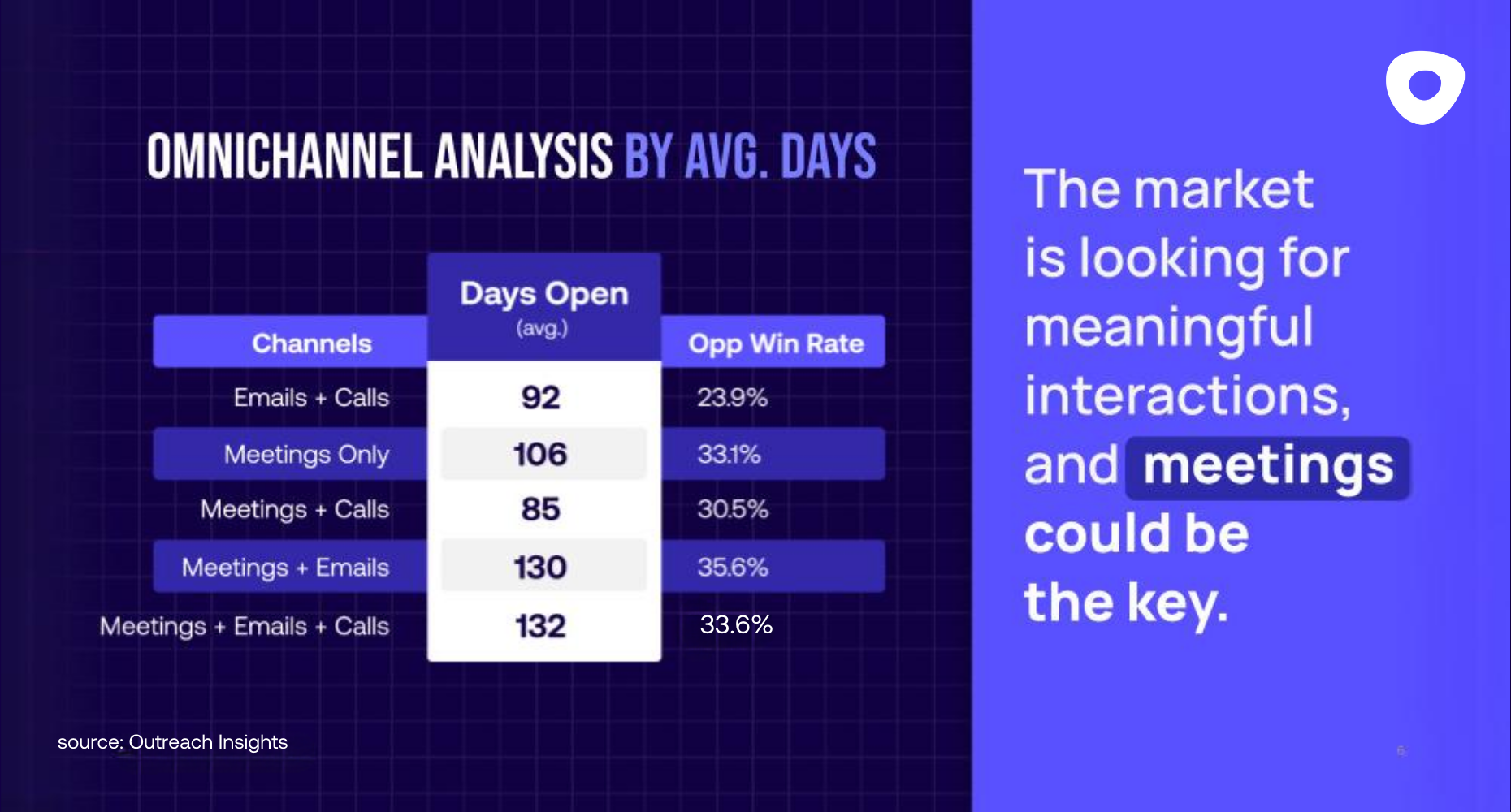
This may require securing enough bandwidth for your AEs to allow for more meetings, along with the right tech tools to conduct and analyze those meetings effectively.
Buyer engagement takes more effort than ever. See how timing, consistent follow-up, and AI-powered execution help revenue teams maintain momentum between touchpoints and improve sales outcomes.
Navigating the new landscape won’t just be dependent on how AEs communicate, but who they’re communicating with. Now is the time for AEs to take advantage of larger buying committees for sales cycle optimization.
Multithreading, in particular, is more easily accessible and valuable for today’s AEs. Outreach data indicates when more than one contact is engaged, deals are 37% more likely to close. But cross-department threading has the potential to increase win rates by 56%.

When AEs are joining the sales cycle earlier and staying on after the sale, they will organically encounter more contacts, and this can work in their favor. But if you don’t have the right structure for your whole team to know who’s talking to who and when, this advantage can be disrupted.
Strategic Account Management and effective account-based selling hinges on shared information, constant alignment, detailed planning, and structured workflows. Any gaps can damage handoffs or reputation and risk buyer frustration or lost opportunities.
Outreach's Smart Account Plans provide one place to land, retain, and expand accounts. Sellers can penetrate more target accounts by crafting compelling business cases, understand the buying committees, and reach out within their existing workflow. Every member of the selling team, AEs included, understands account history and what they need to do next to help win, grow, or retain an account.
You can manage these individual functions without Outreach, they just take time. If you’re not using Outreach, be sure to reevaluate your tech stack and adjust team expectations accordingly. Regular team check-ins and planning will be central to managing stakeholder engagement and taking advantage of multithreading.
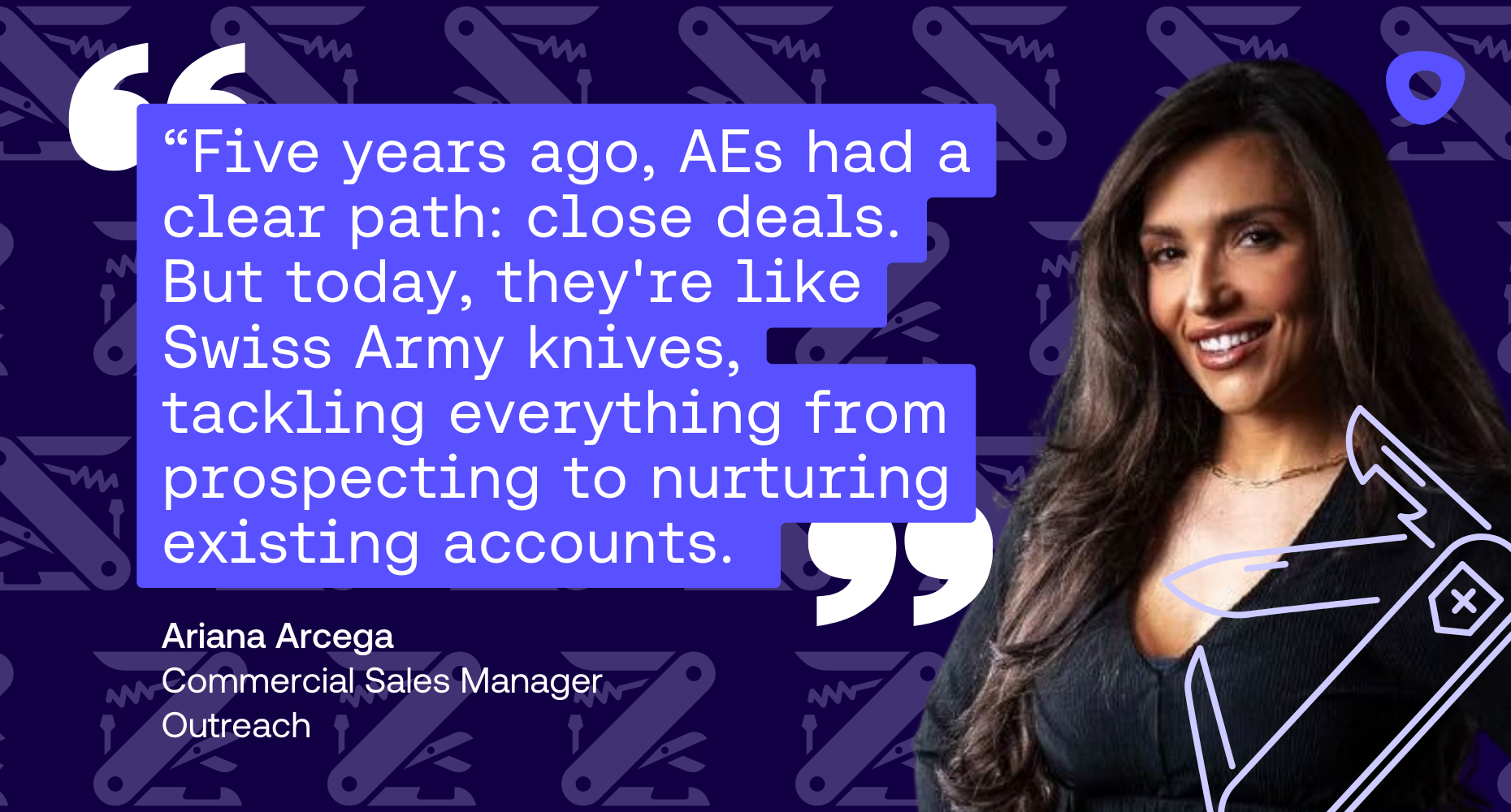
“Five years ago, AEs had a clear path: close deals,” says Outreach Commercial Sales Manager Ariana Arcega. “But today, they're like Swiss Army knives, tackling everything from prospecting to nurturing existing accounts. To thrive in this new landscape, managers should arm their team with smart account planning tools and foster a culture where every team member is a walking encyclopedia on their accounts. It's not just about selling anymore; it's about becoming indispensable.”
When everything has changed for AEs, internal processes and support will have to change too. Evaluate your tech stack along with your goals and reward structure to help your AEs succeed.