Blog
How to conduct a sales meeting your reps value
October 7, 2026
Read more
Stakeholders can make or break your business, so it's crucial to understand who they are, their input level, and how to keep them satisfied while accommodating their ever-changing needs.
Introducing stakeholder mapping to your team members, particularly in the sales and marketing departments, is one of the most effective ways to meet the needs and wants of your primary stakeholders.
Stakeholder mapping is about identifying key stakeholders and understanding how decision-makers influence your sales process. In this article, we'll review stakeholder mapping best practices and how to analyze, implement, and improve your stakeholder map.
Senior AE Grace Presnick breaks down why the traditional approach to account planning is doomed to fail, what to do instead, and 5 practical tips to keep your buyers engaged through long, complex deal cycles with mutual action plans (MAPs, for short).
When it comes to sales, the level of engagement and interest from your stakeholders will influence your sales strategy. Every stakeholder has different needs and perspectives. As sellers, it’s our job to adjust our approach to meet these needs. Ultimately, it makes your sales pitch stronger and more personalized.
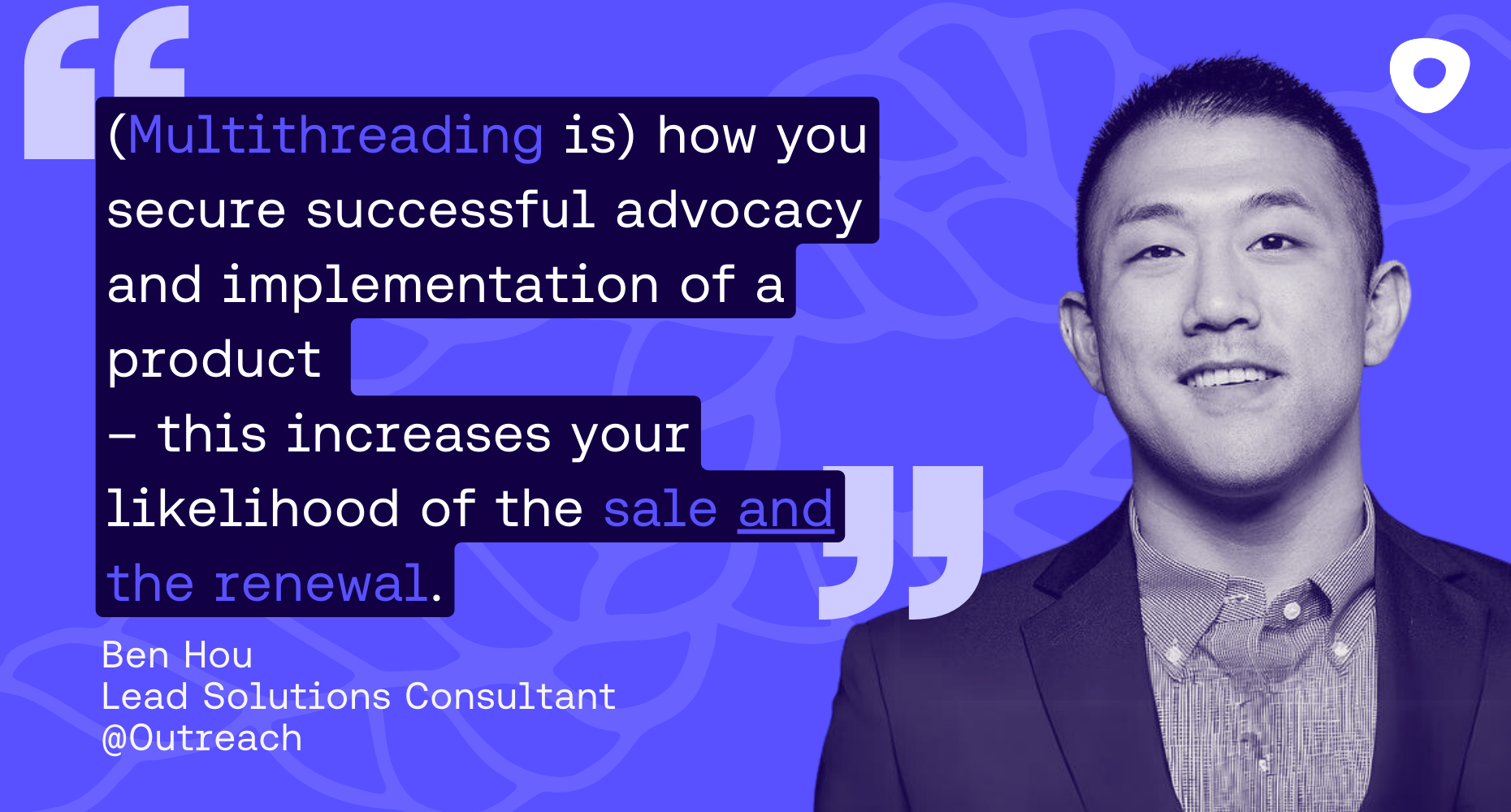
What's more, recent data from Outreach shows that engaging multiple stakeholders in the sales process — what we call multithreading — can lead to bigger deals and more wins. When more than one contact is engaged, deals are 37% more likely to close. By talking to people across different departments and levels in a company, we get an even fuller picture of what the client needs.
Stakeholder analysis is a process used to identify and assess the interest, importance, and impact of different stakeholders on your sales strategy. This ensures effective stakeholder management, especially on potential issues or conflicts.
To perform a practical stakeholder analysis, you need to consider three vital steps: identify, prioritize, and create a plan.
Identifying your stakeholders simply means brainstorming who your stakeholders are. In identifying stakeholders, you'll list all people affected by your work and who are interested in your successes or failures. While brainstorming potential stakeholders, you should consider the following factors:
Prioritizing your stakeholders involves assessing both their influence on and their interest in your project or business. This assessment helps identify which stakeholders will have more impact on your project and determines the level of resources and attention you should allocate to them. It also highlights key stakeholders, facilitating the development of an effective sales strategy that fosters buy-in.
The stakeholder grid, or matrix, is a practical tool for visualizing and prioritizing your stakeholders. It categorizes them based on their level of influence over and interest in your organization, guiding you on appropriate engagement strategies.
Here are four refined categories for stakeholder prioritization:
Once you've identified and prioritized your key stakeholders, the next step is creating an engagement or account plan. The following 4 steps will help you make a plan:
Effective stakeholder management is pivotal for driving sales and achieving overall business success. By aligning with stakeholders' interests, building trust, leveraging their influence, and fostering lasting partnerships, businesses can effectively drive actions that drive real results.
Outreach Data Insights
Sales cycles are getting longer, and more voices need to be heard before any contracts are signed. You already know multithreading is a great practice, but cross-department threading could be your strategic advantage.
Adopting these principles becomes even more critical as sales teams shift towards account-based selling motions, a strategy that demands a modern and strategic approach. However, many teams find that their legacy sales technologies fall short in supporting this complexity.
This is where Outreach comes in. The Outreach platform is designed to help sales teams develop a proactive, targeted, and personalized engagement strategy. These tools enable teams to identify potential champions and decision-makers, build stronger business cases, and optimize the way they target accounts. Through these targeted strategies, businesses can better manage their relationships with key stakeholders, making their sales efforts more efficient and effective in today's fast-paced markets.
To learn more about how Outreach can help sales teams manage and guide their deals, explore our interactive product tour or meet with the team to get a personalized demo.
The term "stakeholder" broadly includes any group of individual who affects your business or can be affected by the decisions you make about your business. They include your business partners, employees, investors, consultants, influencers, sales leaders, and others involved in running your business or contributing to your business through sales.
There are two different types of stakeholders: internal and external stakeholders. External stakeholders influence your buying process, while internal stakeholders are people within your business who overlook and ensure a smooth engagement with those external stakeholders.
Many businesses miss out on crucial sales opportunities because their internal teams don't take the time to recognize stakeholders throughout all different stages of the buying journey. It's natural for businesses (especially start-ups) to become overly reliant on the few regular contacts they've gained over time and fail to establish new pipelines that would maximize their potential customers.
The key to unlocking new pipeline, though, is to deeply understand the wants and needs of potential buyers so that you can attract the right people at the right time. There is an ever-increasing need to accommodate the unfolding group of buyers with increasing knowledge and awareness of their expectations.
In the context of sales, the terms "stakeholders" and "decision makers" often refer to different roles, although there can be some overlap between the two groups.
Stakeholders are individuals or groups that have an interest in the outcome of a particular project, product, or decision. In sales, stakeholders can include a wide range of people:
Stakeholders may not have the authority to make the final purchase decision, but their needs, concerns, and feedback can influence those decisions. They are often consulted or considered during the sales process because their acceptance and support are crucial for the successful implementation and utilization.
Decision makers are the individuals within an organization who have the authority to commit to purchasing decisions. In the sales process, these are the key individuals that sales professionals aim to convince, because they authorize spending, sign off on purchases, or set priorities for what solutions or technology are necessary.
Decision makers can be senior executives, department heads, or any individual designated by the organization with the power to make purchasing decisions. They might consider the input of various stakeholders, but ultimately, they have the final say in whether a sale goes ahead.
Stakeholder mapping is a visual process that recognizes all stakeholders of a project, idea, or product. In this context, stakeholder mapping represents everyone who influences major decisions and actions in your business or organization. Stakeholder mapping helps you establish lasting stakeholder relationships, maximize your profits, and stay ahead of your competitors.
A stakeholder map allows sales reps, project managers and the marketing team to understand how each stakeholder is involved in the business or organization, categorize them according to their level of engagement and role in decision-making, and respond to their unique needs. This makes it invaluable in aligning B2B sales strategies to meet customer needs and preferences. It also helps establish a framework for your own mutual action plans to benefit internal and external stakeholders in sales.