TL;DR: Re-engaging closed-lost opportunities is one of the highest-value, lowest-effort pipeline sources available to sales teams — but manual follow-up has always made it impractical. Outreach's AI Agent eliminates that friction by automatically pulling CRM context, identifying the right contacts, and generating personalized outreach in seconds. This article shows exactly how the workflow operates and why it matters for revenue teams.
Re-engaging closed-lost opportunities has always been one of those necessary evils in sales — the kind of task that sits on your to-do list because you know it's valuable pipeline, but somehow never quite makes it to the top.
The process was tedious:
- Search through Salesforce records
- Figure out which contacts were involved
- Piece together the context
- Craft personalized messaging from scratch
For most reps, this meant spending 20 to 30 minutes per opportunity just to get a single email out the door. And let's be honest — when you're juggling active deals and hitting quota, going back to closed-lost opps often falls to the bottom of the priority list.
How Outreach Uses AI to Automate Closed-Lost Re-Engagement
That's exactly why Outreach account executive Chance Fakih partnered with RevOps to build an AI-powered workflow. Using an Outreach AI Agent, the system automatically:
- Searches CRM records for accounts with closed-lost opportunities
- Pulls in historical deal context (pain points, objections, timeline, stakeholders)
- Identifies the correct contacts to re-engage
- Generates personalized re-engagement messaging
- Enrolls those contacts into the appropriate sequence
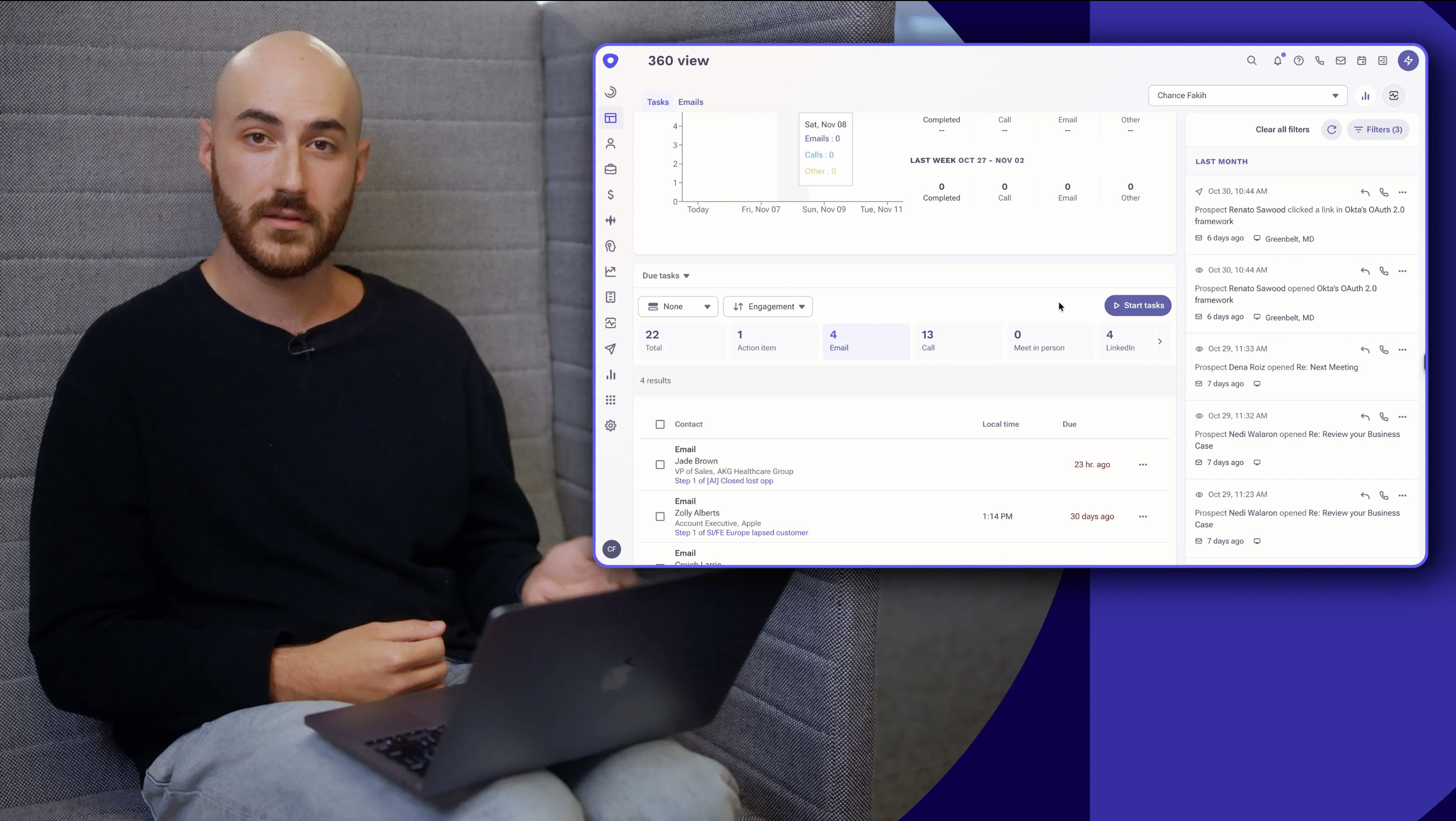
All Chance has to do is review the AI-generated email for accuracy and hit send. From there, Outreach automatically creates personalized follow-up tasks based on the original deal context.
What used to take 30 minutes per opp now takes seconds — without sacrificing personalization or relevance.
What This Looks Like in Real Deals
Here’s a real example from AKG Healthcare:
The Outreach AI Agent:
- Identifies Jade as a past stakeholder on a closed-lost opportunity
- Pulls all relevant deal insights (pain points, reasons for the loss, outcome)
- Generates a re-engagement email referencing those challenges
- Frames the outreach as a timely check-in and opens the door for a renewed conversation
The entire workflow runs automatically — no digging through old notes, no manual rewriting, no context lost.
For reps who’ve avoided closed-lost follow-up because the lift felt too heavy, it becomes a hands-off, high-return pipeline driver.
Why This Matters for Revenue Teams
Closed-lost opportunities are one of the easiest sources of net-new pipeline — but only if sellers have the time to follow up. AI removes the burden, helping teams:
- Revive stalled deals at scale
- Personalize outreach automatically
- Improve win-back and re-engagement rates
- Free up rep time to focus on active opportunities
Reps stay focused on what matters most, while AI ensures no valuable opportunity slips through the cracks.
Watch the full Outreach on Outreach video to learn more below.
Hey guys, I'm Chance Fakih, account executive here at Outreach. And today, I'm gonna show you how we use our AI agent to make it easy for me to reengage closed lost opportunities. Following up on closed lost opportunities has always been one of those very necessary and easy sources of pipeline going back to my SDR days where we would search through Salesforce records, read notes, read which context were associated with those opportunities, create the messaging from scratch, write it up and then send it out. Actually, it took this same model to partner with our RevOps team to use our AI agent to search through old records, identify accounts with open opportunities, take all that information and then compile a message using AI to write it out and then send it on autopilot. So, now the Outreach AI agent will automatically identify those accounts, sequence those contacts, generate the messaging and all I have to do is read it, check that it's correct and then send it off to create pipeline automatically. From there, all my follow-up tasks are automatically generated and personalized with all of that context. Let's take this example from AKG Healthcare, where the AI agent has identified Jade as a past contact from that opportunity, taken the context from it, as well as all the details and pain that they were struggling with to rehash it and reengage them with the same messaging. And just like that, I've taken a process that used to take twenty to thirty minutes and cut it down into instantaneous to automatically send off these emails.