If it feels like every time you open LinkedIn another RevTech merger has dropped, you’re not imagining things. Consolidation is accelerating, and for revenue teams, that means roadmaps shift, support tickets pile up, and integrations you rely on can vanish overnight.
On paper, these mergers promise innovation. In reality, they often put your team in integration limbo. Engineering resources get redirected, features stall, and your workflows become a mismatch of half-integrated modules. For RevOps leaders, the stakes are high: every delay slows deals, undermines forecasts, and risks pipeline health.
If this sounds like a lot, we’ve got you! This guide uncovers the five most common mistakes revenue leaders make after a RevTech merger — and how to avoid them. You’ll get practical checklists, red flags to watch for, and proof points to help you evaluate vendors with confidence. Let’s dive in.
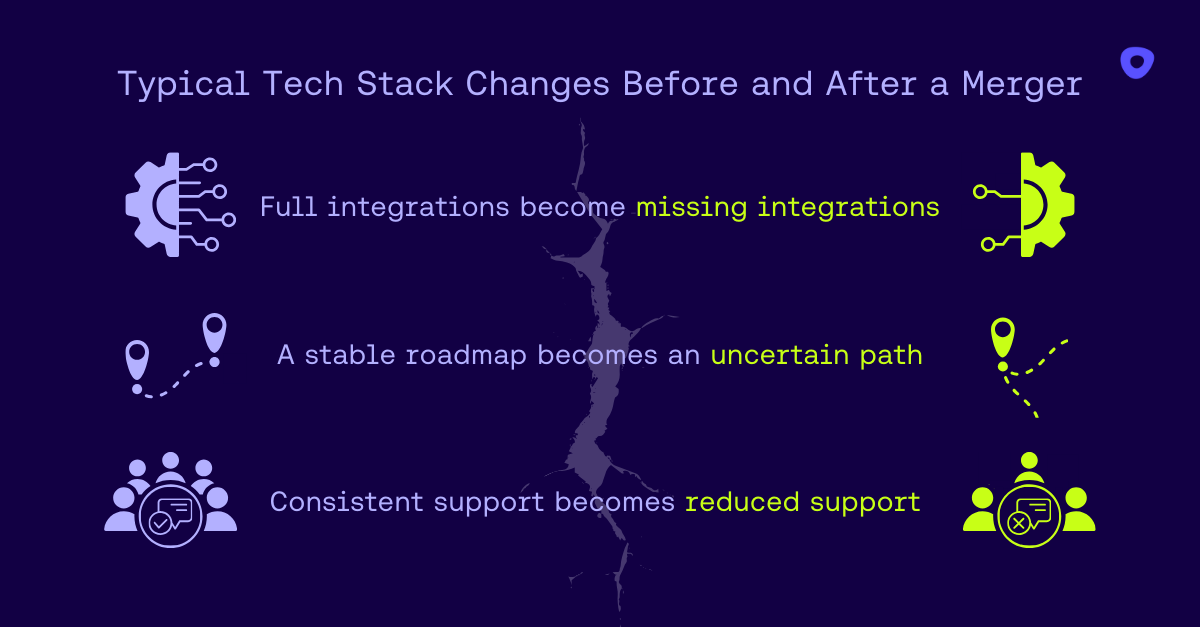
The features you depend on today may not survive tomorrow. Duplicate or “non-core” capabilities often get sunset, forcing teams to retrain on new tools, or scramble for alternatives.
2. Integration disruptions:
Mergers means reconciling two sets of APIs, data models, and workflows. Critical connections to your CRM, data warehouse, or marketing automation platform can break in the process, stalling seller productivity.
3. Shifts in customer service priorities:
Support teams often get stretched thin as they learn new systems and inherit more tickets. Response times slow, escalation paths become murky, and the customer experience you once relied on can quickly degrade.
Mistake #1 – Relying on vendor promises without proof
After a merger, you might hear the “seamless” tossed around. But for enterprise teams, the reality is rarely seamless. Vendors promise smooth integration, quick feature rollouts, and even “better support.” Too often, what customers actually get is a months-long stall in innovation while product and engineering teams race to stitch together two codebases.
Where it costs you:
Roadmap commitments get delayed or scrapped.
Promised features arrive months (or years) later.
Sellers lose confidence in their tools and adoption plummets.
What to do instead:
Ask vendors for proof, not promises. Press for benchmarks: how many engineers are working on net-new innovation vs. integration? Top platforms keep at least 70% focused on new feature development.
Request roadmap delivery cadence: new features should still ship every 6–8 weeks, even during consolidation.
Secure contractual guarantees: price-locks, clear exit clauses, and portability clauses that protect you if promises fall flat.
Mistake #2 – Ignoring integration dependencies
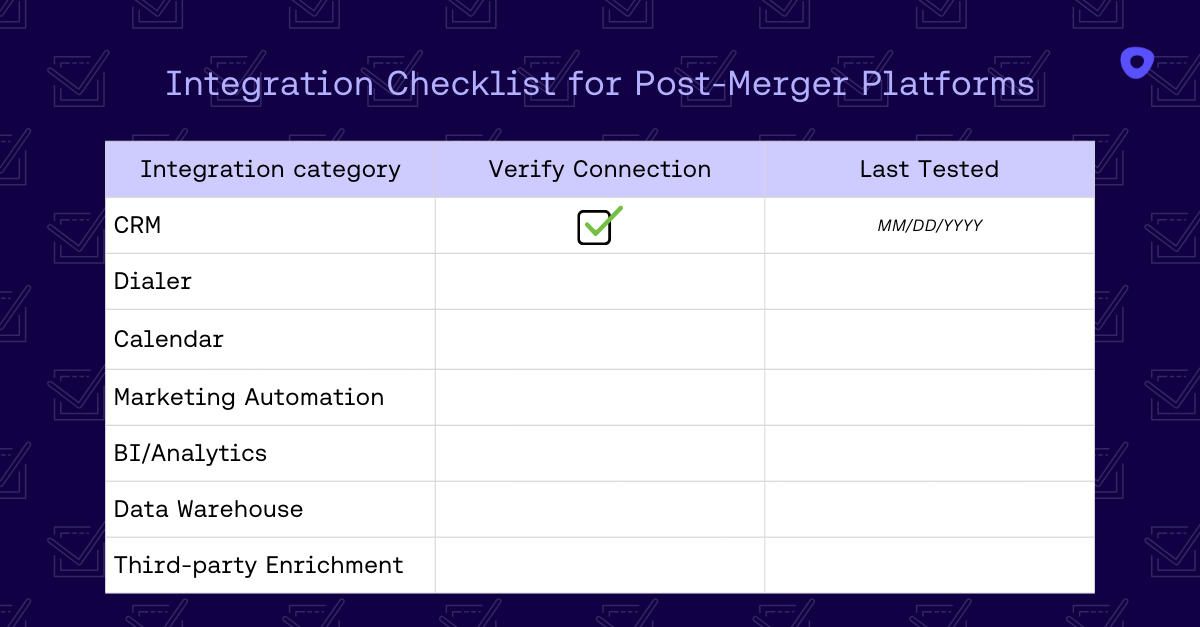
When RevTech vendors merge, integrations are often the first casualty. Two platforms rarely share identical APIs, data models, or sync logic — and while vendors work behind the scenes to reconcile them, your team can be left with broken workflows.
Even the best technology fails if your team doesn’t adopt it. After a merger, this risk skyrockets. Familiar workflows shift, core features change or disappear, and sellers are asked to relearn processes in the middle of an already demanding quarter.
Why this matters:
Sellers lose confidence in tools they once trusted.
Training slows down pipeline momentum.
Adoption gaps widen between experienced reps and new hires.
When your revenue tools feel unpredictable, even small disruptions can compound into missed quotas and stalled deals.
Tips for enabling your team during the transition
Prioritize continuity. Ensure your core workflows (CRM updates, forecasting, reporting) run the same way they always have while new features are phased in.
Create a phased adoption plan. Break training into smaller milestones, targeting high-impact workflows first instead of overwhelming sellers with a wholesale shift.
Protect productivity. Work with vendors to guarantee quota-carrying reps maintain at least 80% of their normal output during transition.
Over-communicate. Provide reps with clear guidance on what’s changing, when, and why. Plus, create feedback loops to catch adoption roadblocks early.
The desire to switch to Outreach really came from sales leadership. We just weren’t getting the depth of insight we needed... The need to switch was a no-brainer when you realize what the tool can do versus the limitations of our previous solution.
Andy Wiggans, Vice President and Managing Director of EMEA, BrightTALK
Mistake #4 – Overlooking the total cost of ownership
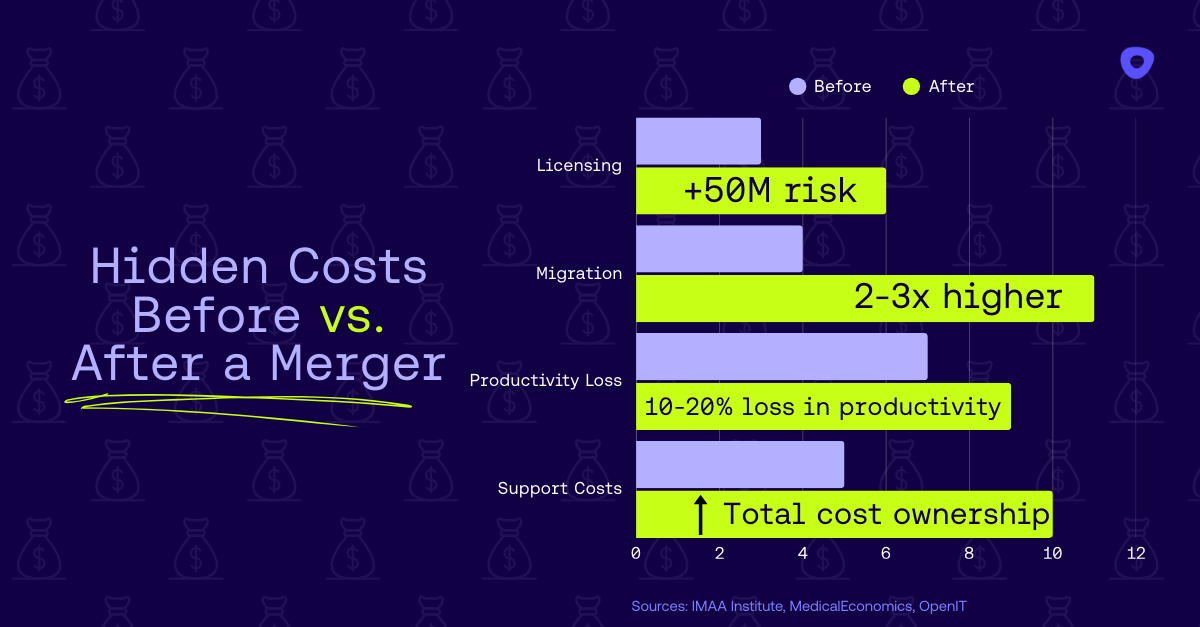
The sticker price of a newly merged platform rarely reflects the real cost. Licensing shifts, hidden migration fees, and productivity dips during the transition can quietly eat into your ROI. What looks like a cost-saving move on paper often becomes more expensive than staying put.
Where the costs pile up:
Licensing changes. Post-merger pricing models are often “repackaged,” meaning features you had before get pushed into higher tiers or bundled add-ons.
Migration costs. Data mapping, workflow reconfiguration, and retraining come with hard costs. In one Fortune 200 divestiture, poor license planning nearly created $50 million in unexpected software costs.
Productivity dips. Every week sellers spend learning new systems instead of selling is lost revenue. Studies of system migrations in adjacent industries like healthcare show a 10–20% productivity drop in the first weeks of transition — enough to derail an entire quarter’s targets if not planned for.
How to avoid it:
Ask for a Total Cost of Ownership (TCO) model that includes licensing, migration, training, and potential downtime.
Negotiate 12–24 month price-locks and protect yourself against post-merger hikes.
Quantify productivity risk: vendors should commit to training timelines and baseline output safeguards.
Mistake #5 – Missing the bigger picture on vendor stability
It’s tempting to evaluate a platform solely on its features. But after a merger, the real risk often comes from what’s happening behind the scenes. Vendor stability determines whether your investment will hold its value over the long run, and it’s one of the most overlooked areas in post-merger evaluations.
What to watch for:
Financial health & funding history. Is the vendor growing sustainably, or dependent on investor capital that may dry up post-merger? Financial red flags often translate into stalled product investment.
Leadership changes. Executive churn is common after consolidation. A revolving C-suite can leave strategy in flux and product roadmaps vulnerable to sudden shifts.
Employee turnover. When engineering and support talent exits, innovation slows and service quality drops. Even the best architecture struggles if the people behind it aren’t stable.
How to avoid it:
Research the vendor’s funding history and financial performance. Are they profitable, or simply scaling for an exit?
Ask for executive retention commitments and visibility into leadership changes.
Track employee attrition via public data sources (e.g., LinkedIn). High turnover in engineering or customer success is a signal to dig deeper.
How to future-proof your RevTech stack
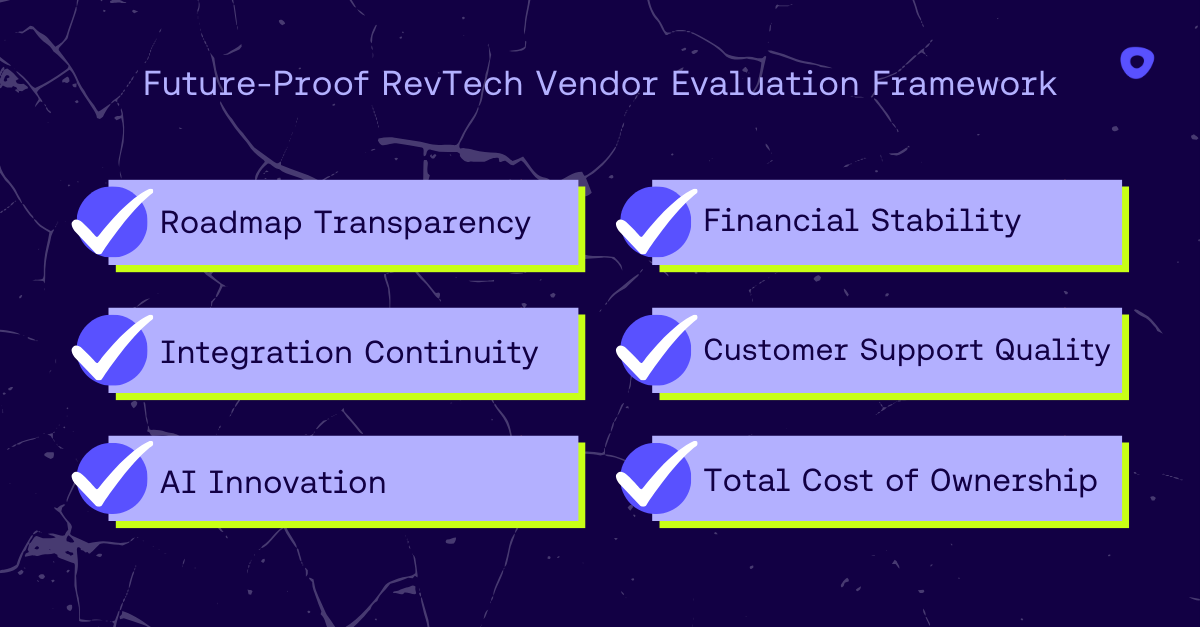
The best way to avoid merger chaos is to plan ahead. Instead of reacting to vendor shakeups, revenue leaders should proactively evaluate platforms against a clear set of future-proofing criteria.
Bottom line: your next platform should be unified, stable, and innovating at speed — not stalling while engineers reconcile two codebases.
Why Outreach stands out in a consolidating market
While other vendors are busy merging, Outreach is already delivering the future of revenue technology.
Stability, scalability, and consistent innovation. With 33 billion customer interaction signals processed every week, SOC 2 Type II compliance, and a track record of shipping new capabilities every quarter, Outreach gives enterprise teams the scale and dependability they need.
Proven impact. Customers report a 44% reduction in forecast prep time, 10x increase in seller productivity, 45% larger deal sizes, and a 26% increase in win rates.
Mergers, acquisitions, and market shifts are accelerating as companies without true innovation in agentic AI struggle to keep pace. While the market is consolidating, at Outreach we’ve taken a clear path forward: innovating at speed with a relentless focus on AI to drive measurable outcomes for our customers.
Abhijit Mitra, CEO at Outreach
Download the full guide
In the full guide, you’ll get detailed benchmarks, red flags to watch for, and actionable questions to ask vendors—everything you need to navigate RevTech mergers with confidence.
RevTech consolidation isn’t slowing down. Mergers will continue to reshape the landscape, bringing with them uncertainty, broken integrations, and shifting priorities. But the five mistakes outlined in this guide don’t have to derail your revenue strategy.
By demanding proof instead of promises, stress-testing integrations, prioritizing adoption, calculating total cost of ownership, and evaluating vendor stability, you can protect your pipeline and keep your team executing with confidence.
With Outreach, you don’t have to wait for innovation to trickle down from a merged roadmap. You get a single, unified platform powered by live AI Agents — delivering value today while competitors stall.